About
Be ambitious in your research in engineering or information technology and become part of a community of scholars and practitioners dedicated to creating a better world.
Graduate research at the Faculty of Engineering and Information Technology (FEIT) places you at the centre of Melbourne's research and innovation life, alongside Melbourne Connect and the Melbourne Biomedical Precinct. It also connects you to the world, through long-standing partnerships with government, industry, research centres and academic institutions, locally and globally.
Industry
What's your organisation's research and development challenge?
Whatever its nature or size, we will connect you with the researchers and expertise to address it.

Prospective Students
Considering a PhD or MPhil?
Explore research projects across our departments, discover joint PhD opportunities with our international partners, or find out about research scholarships.
Our research degrees
Our PhD and MPhil candidates develop academic leadership, independence, creativity and innovation through their research. Find out about entry requirements, duration and how to apply.
Doctor of Philosophy – Engineering and IT
Master of Philosophy - Engineering and IT
Scholarship programs
Scholarships are available to high-achieving students undertaking graduate research at the University of Melbourne.
The University of Melbourne:
- Top-ranked university in Australia
- Leader in graduate research training
- Choose your research area expertise
- Be supported and supervised by world leading researchers
- Professional development opportunities
- Generous scholarships available
- Comprehensive support network
Explore the work of our graduate researchers
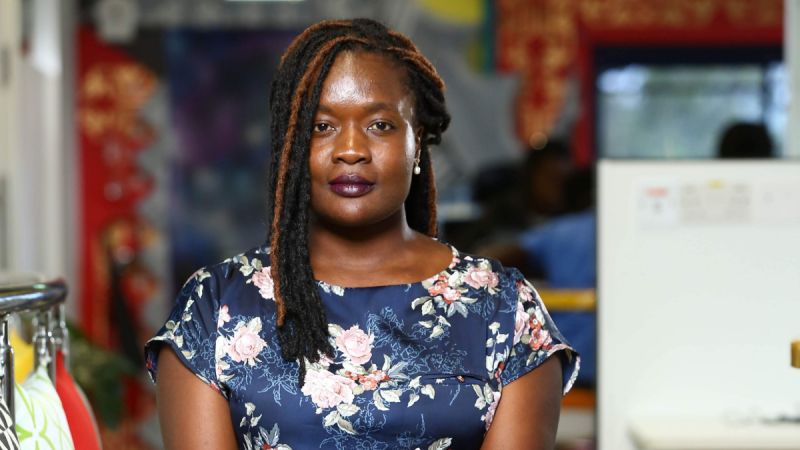
Developing new technologies to nurture Indigenous knowledge
PhD candidates should not be afraid to pursue topics that “get you out of bed every day,” says Dr Kagonya Awori. From a PhD internship at Microsoft to joining Google as User Experience Research Lead for Search (Sub-Saharan Africa), Dr Awori's passion has shaped her research-driven career in tech.


From a PhD to a job, startup company and Australian citizenship
Dr Martin Reinoso's PhD explored virtual reality and augmented reality as learning tools. Now as Senior Virtual Reality Developer for the not-for-profit organisation Orygen, Dr Reinoso uses the skills and knowledge gained during his PhD to improve the mental health of young people.
Making city planning more sustainable and inclusive
Experienced architect and urban planner Mark Allan embarked on a part-time PhD in Engineering to benefit his career and major projects at the City of Melbourne. His research led to a framework for better urban regeneration projects.
Graduate Research Showcase winners
Join us in celebrating this year's winners of the FEIT PhD Lab to Launch competition and the FEIT Graduate Research Showcase poster competition.
-
First place
Xanthe Lowe-Brown, for MoodDJ, an emotion-regulation intervention for music-streaming platforms
Second place
Xiaoyi Hu, for a thermal multispectral sensor system using machine learning to support non-invasive skin cancer detection
Third place
Chia-Chun Pan and Yu-Hsi Chen, for scalable, pixel-level metasurface sensors supporting environmental and health monitoring
Fourth place
Ron Shaharit, for LLM Lab, making GPU-cluster AI model serving accessible without command-line expertise
Fifth place
Qi Kong, for ScholarFlow, an AI-assisted platform for literature discovery and research-gap identification
Sixth place
Tian Li and Qingtan Shen, for process-driven AI-agent development and monitoring
-
First place
Nicholas Winterling
Biomedical Engineering
Quantitative Comparison of Cochlear Implant Stimulation Methods using Computational ModelsSecond place
Vito Lokito
Infrastructure Engineering
Mesoscopic Insights on the Variability of Recycled Steel Fibre Reinforced ConcretePeople's choice
Habib Amidu
Chemical Engineering
Enhancing PFAS Enrichment and Recovery in Foam Fractionation through Surface Tension Control and Normalised Foam Harvesting