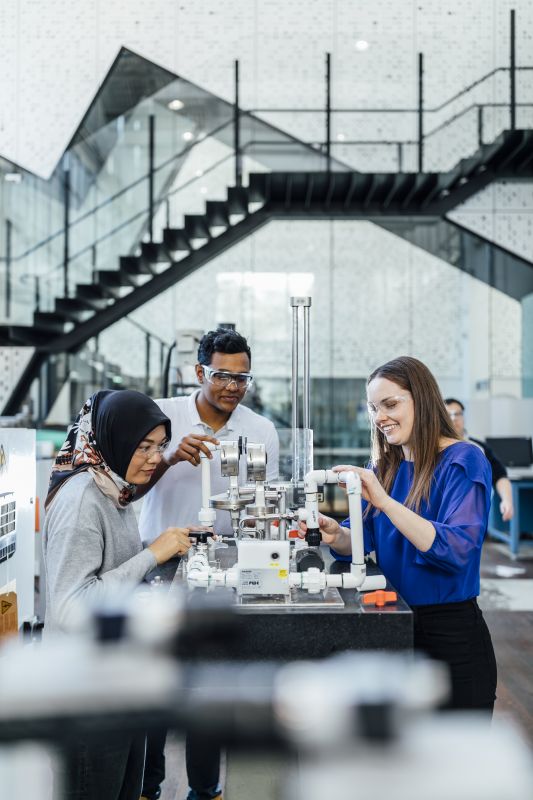
TARGET 1: SUSTAINABILITY RESEARCH IS INTEGRATED WITH CAMPUS OPERATIONS AND PLANNING, TO BE AN INTERNATIONAL EXEMPLAR OF A SUSTAINABLE COMMUNITY.
INDICATORS OF PERFORMANCE
- Narrative detailing the University-wide efforts (such as funding, governance structures, and incentives) that have been established and used to facilitate two-way exchange between researchers and research into campus operations and planning
- Report on the number of living lab projects being pursued, research and professional staff involved, community members involved, and individual case studies describing progress against sustainability indicators associated with each project
HOW FEIT IS RESPONDING
- We will report annually on the development of FEIT living labs
- We will integrate sustainability into the induction of new staff and students.
TARGET 2: THE HIGHEST QUALITY RESEARCH IS CONDUCTED THAT CONTRIBUTES TO KNOWLEDGE, ACTION, AND IMPACT ACROSS THE DISCIPLINARY AND INTERDISCIPLINARY DIMENSIONS OF SUSTAINABILITY.
INDICATORS OF PERFORMANCE
- Report comprising proxy quantitative and qualitative measures at different levels: for example investment from Chancellery or Academic Divisions, individual researcher level achievements, achievements by Centres and Institutes
- Use of relevant communication channels to describe the dissemination and uptake of sustainability-related research externally and the translation of sustainability-related research outcomes internally, drawing on Academic Division-level plans and varied cross-divisional activities and related outputs
HOW FEIT IS RESPONDING
- We will report annually on FEITs sustainability impacts

TARGET 3: RESEARCHERS MAKE CONSIDERED DECISIONS ON THE SUSTAINABILITY IMPACT OF THEIR RESEARCH PRACTICES AND ACTIVITIES.
INDICATORS OF PERFORMANCE
- Appropriate education on sustainability impacts of research is embedded in researcher induction, including graduate researcher training
- Case studies documenting the development and use of various tools, resources and approaches to address the sustainability impacts of research. Options include a carbon footprint calculator piloted by Melbourne Climate Futures, supported by reporting on the amount of CO2 avoided.
HOW FEIT IS RESPONDING
- We will encourage reflections of research papers on sustainability impact (against real targets)
- We will prepare a case study on the method used to conduct sustainability subject mapping