About the event
Speakers
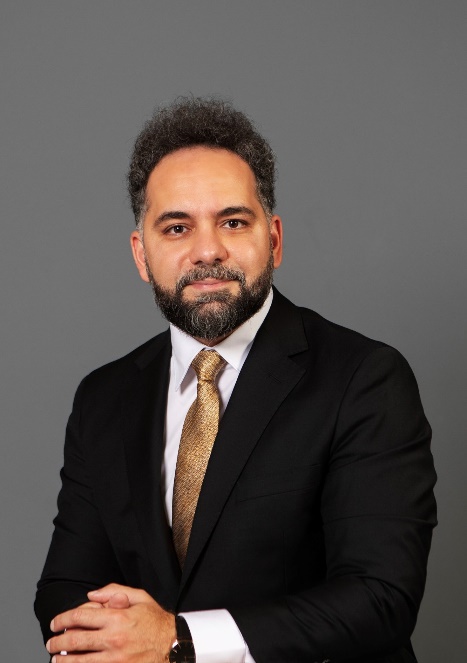
Milad Haghani
Associate Professor and Principal Fellow at The University of Melbourne. He is the Chair and Founder of the Crowd Safety Summit, an initiative he established in 2023 to address the critical need for reducing preventable deaths and injuries in urban settings. Committed to making this a transformative event, he has pledged to continue hosting the Summit every two years. The Summit is uniquely designed as a freely accessible platform for academics, government representatives, and industry professionals worldwide whose work intersects with the vital issue of crowd safety.
Topic 1: Vehicular traffic models, fluid motion models, animal motion models, particle motion models – Do they have any place in crowd simulation?
Topic 2: The theory of self-optimising crowds, or managing crowds from within – How does it work, what do we know so far, and what do we need?
Claudio Feliciani
Project Associate Professor at The University of Tokyo, Japan, with a background in engineering and a passion for social sciences, his research focuses on pedestrian traffic and crowd management, blending physics and mathematics to assess crowd conditions and develop simulation models. He has published extensively and was co-awarded the 2021 Ig Nobel Prize in kinetics for studying the disruptions caused by pedestrians using mobile phones.
Topic: Order without orders: the future of crowd control
Xiaolu Jia
Lecturer at Beijing University of Technology, China. She completed her PhD at the University of Tokyo in 2020 and then worked as a Project Assistant Professor there. Her research focuses on pedestrian dynamics in transportation systems, including simulation, data analysis, and behaviour modelling.
Topic: Navigating the obstacle: experiments, simulations, and empirical management at a railway station
Soon-Joo Wang
Professor and Chief of the Regional Emergency Centre at Hallym University and Dongtan Sacred Heart Hospital. He is the Founding Chief of the International Research Centre of Crowd Crush (IRCCC) and President of the Korean Society of Geriatric Emergency Medicine. A leader in emergency medicine and disaster response, he has held prominent roles in advancing research and practice in these fields.
Topic: A multidisciplinary approach for reducing casualties in crowd crush accidents: Efforts and limitations in the Itaewon Halloween Festival Tragedy
Nan Li
Associate Professor and Assistant Dean at the Department of Construction Management, School of Civil Engineering, Tsinghua University. His research focuses on understanding and improving the resilience of built environments, including buildings, infrastructure systems and humans whose needs they serve, by extensive applications of advanced computational approaches.
Topic: The effects of social relationship on pedestrian evacuation behaviours
Homa Bahmani
Associate Researcher at Chengdu University of Technology. Her research interests include successful project management of natural disaster projects, emergency management, evacuation safety, and human interaction with built environment in the context of massive evacuation.
Topic: Evacuation safety of young-age students within the context of existing school buildings: An experiment-based evacuation modelling
Anton Dierickx
Co-founder and COO of CrowdScan, a patented crowd monitoring technology. He has been Deputy chief Special Arrest, (Deputy) Chief Public Order and SAG member at the Antwerp Local Police Force. He is lecturer ‘Introduction to crowd management’ at the National School for Police Officers (Brussels), holds a post-graduate in disaster planning and loves to combine data & operations.
Topic: Can data and technology enhance safety and efficiency at events? Challenges and best practices from Belgium and the Netherlands.
Katsuhiro Nishinari
Professor of University of Tokyo, received his Ph.D. degree from The University of Tokyo in 1995. His research interests include mathematical physics, vehicular traffic, pedestrian dynamics and logistics, and has published several books on traffic phenomena, He was a crowd manager in Tokyo Olympics 2020 and won the Ig Nobel Prize in 2021.
Topic: Crowd management platform and its application to Tokyo Dome City
Junyoung Park
Professor of Kumoh National Institute of Technology, earned his bachelor’s and master’s degrees in mechanical engineering from Kyungpook National University and his Ph.D. from Purdue University. Following postdoctoral research at Osaka University, he is now a professor at Kumoh National Institute of Technology, focusing on pedestrian evacuation, Faster-Is-Slower, and Obstacle Effect studies.
Topic: What Happened in Itaewon on October 29, 2022: Focused on Crowd Surge
Pernille H. Christensen
Associate Professor of The University of Technology Sydney, a seasoned built environment practitioner and academic known for her expertise in urban resilience and mitigating the impacts of social and climate-change-related disasters in urban areas. Her work in counterterrorism protective security focuses on protecting people in crowded places.
Topic: Reconsidering crowded places protective security: An integrated project delivery approach
Mohcine Chraibi
Researcher from Forschungszentrum Jülich, holds a diploma in computer science and, since 2017, leads the Pedestrian Dynamics-Modelling Division at the Civil Safety Research Institute. He completed his postdoctoral thesis in traffic simulation and serves on the editorial board of Scientific Reports, as well as the steering committees of PED and TGF conferences.
Topic: Enabling pedestrian dynamics research via software engineering: Modelling motivation and behaviour in bottleneck scenarios
Jian Ma
Professor at Southwest Jiaotong University, China. He is the director of the Key Laboratory of Traffic Safety Technology, a member of the Society of Public Safety Science and Technology, and a representative member of the National Public Safety Basic Standardisation Technical Committee (SAC/TC 351).
Topic: Accurate and fast evacuation process forecasting for complexed built environment
Codee Ludbey
University of Technology Sydney, seasoned security management professional and academic known for his expertise in merging security, placemaking, and urban design principles to create secure built environments. Codee has a particular expertise in crowded places design, with a focus on protective security and counter-terrorism planning.
Topic: Crowded places: Long-term security resilience in rail precinct design
Hisashi Murakami
Assistant Professor at Kyoto Institute of Technology, Japan. He earned his PhD from Kobe University, Japan. His research interests include collective animal behaviour, such as fish schooling, crab swarming, and human crowd dynamics, as well as their simulation modelling.
Topic: Understanding self-organisation in human crowds through body-part-movement tracking
Ramachandra Rao
Professor in the Department of Civil Engineering at the Indian Institute of Technology Delhi, India. Head, Transportation Research and Injury Prevention Centre (TRIP Centre), IIT Delhi. His research interests are in Traffic dynamics, pedestrian dynamics, public transportation systems planning, road safety and urban freight logistics.
Topic: Pedestrian characteristics in metro stations in normal and evacuation situations
Ashish Verma
Professor of Transportation Systems Engineering at the Indian Institute of Science (IISc), Bangalore, India, and Convenor of the IISc Sustainable Transportation Lab. A former Visiting Professor at ITMO University, Russia, and Visiting Fellow at QUT, Australia, he is the founding Editor-in-Chief of Sustainable Transport and Livability.
Topic: Understanding dynamics of spiritually motivated crowd for their safety: A case study of world's largest human gathering, Kumbh Mela
Eunhee An
the founder and CEO of WhiteScan Inc. Her research focuses on design-oriented studies leveraging data science and Geographic Information Systems (GIS) to address crowd density management, traffic simulation, and consumer behaviour analysis. She also serves as an adjunct professor in the Department of Artificial Intelligence at The Catholic University of Korea
Topic: Disruptive AI transformation: Revolutionising crowd prediction and management with digital twins and simulation
Sangho Lee
Director of Global ITS Business at Nota AI. He plays a pivotal role in expanding global business operations in Nota AI, driving technical advancements in ITS industry introducing Edge AI technology. Prior to joining Nota AI, he worked in global companies such as PTV Group and Siemens Digital Industry Software after studying at KAIST and TU Delft.
Topic: Developing mobile crowd management system using Edge AI for preventing large-scale crowd surge incidents
Meghna Verma
An Associate Professor and currently Heads Centre for Excellence Sustainability at Ramaiah Institute of Management, Bangalore, India. Her research mainly focuses on consumer behaviour in tourism, application of AR and VR, marketing of sustainable transport services, women safety, and crowd behaviour in mass religious events
Topic: Understanding the Complex Behaviour of Tourists in Religious Mass Crowd Events: Insights from Kumbh Mela Ujjain 2016
Workshops
- Milad Haghani: Behind the scenes of crowd motion simulation
- Mohcine Chraibi: Hands-on crowd dynamics: Simulating and measuring pedestrian behaviour
- Claudio Feliciani: How to measure crowds quantitatively
Event hosts
Inhi Kim: Associate Professor at Cho Chun Shik Graduate School, KAIST, received his Ph.D. from the Department of Civil Engineering at the University of Queensland, Australia, in 2014. Before joining academia, Inhi worked as a transport engineer and planner in the German transport software company PTV Group.
Kitae Jang: Professor at Cho Chun Shik Graduate School of Mobility and the director of KAIST Mobility Institute. He received Ph.D. degrees in civil and environmental engineering from the University of California, Berkeley, U.S., in 2006 and 2011, respectively.
Sponsors