$2.6m NHMRC grants propel medical research breakthroughs
Advancements in 3D printing of human tissue and understanding of blood infection will be closer to improving health outcomes, thanks to two grants, totalling $2.6 million, from the National Health and Medical Research Council (NHMRC).
Biomedical engineers Associate Professor David Collins and Dr Samuel Cheeseman from the Faculty of Engineering and Information Technology (FEIT) will lead each project. Their work aims to accelerate the way new diseases and treatments are researched, and to improve how blood infections are understood and treated, respectively.
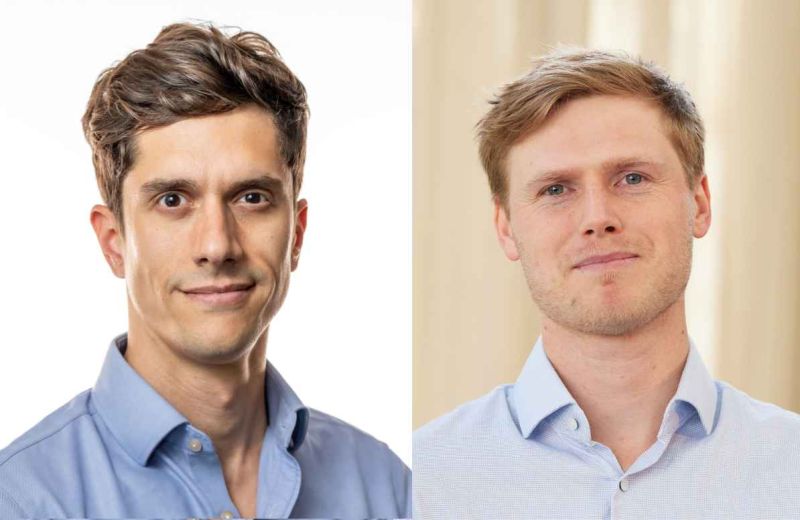
From left: Associate Professor David Collins and Dr Samuel Cheeseman
FEIT Dean Professor Thas Nirmalathas congratulated the researchers and their teams.
“This research will progress safer, more robust health outcomes, delivered by next‑generation medical solutions,” Professor Nirmalathas said.
“It’s deeply inspiring to see the hard work of our researchers and their collaborators being supported for their achievements at the forefront of medical innovation.”
The NHMRC Investigator Grants support the highest-achieving health and medical researchers across all career stages to pursue ambitious projects that benefit and further the knowledge of medicine.
Associate Professor David Collins, Collins BioMicrosystems Laboratory | $2 million
Associate Professor Collins and his team have developed an ultra-fast method to 3D print human tissue-like structures, called dynamic interface printing.
With support from Professor Kaylene Simpson from The Sir Peter MacCallum Department of Oncology and Professor Elizabeth Vincan, from the University of Melbourne’s Department of Infectious Diseases, the group is working to develop models of tissue, named 3D printed hydrogel transwell models, which can be created through dynamic interface printing and replicate complex tissues.
These models will be used to mimic human tissue found in the gut and blood vessels, providing researchers with realistic models to study how diseases progress and how potential treatments might work.
“3D bioprinting is a relatively new field and working with living cells presents significant technical challenges. Previous methods were slow, and printed structures tended to be fragile and difficult to handle,” Associate Professor Collins said.
“The 3D printed hydrogel transwell models we are developing will provide the architecture to utilise the speed and precision of dynamic interface printing developed by our team.”
This work will open new opportunities in rapid drug discovery and personalised medicine. Cymphony Bio, a startup founded by Associate Professor Collins and his team, has already begun to commercialise dynamic interface printing. The development of 3D printed hydrogel transwell models will continue to progress its application to medicine.
Dr Samuel Cheeseman | $688,405
Dr Cheeseman will investigate what happens to the surface of invasive bacterial cells when they enter the blood, such as during bloodstream infections.
Blood is rich in proteins, which carry out many functions. When bacteria, such as E. coli or Staphylococcus aureus, infect the bloodstream, these blood proteins can stick onto the surface of the bacteria and effectively become the bacteria’s new cell surface.
This bacterial cell surface is the first part of bacteria that interacts with our immune system and drugs. Dr Cheeseman aims to build an understanding of how this surface changes in the blood, so researchers and medical professionals can better model and predict how our immune system and potential treatments interact with bacteria in the blood.
Read more about NHMRC grants awarded to University of Melbourne researchers