An innovative low-risk approach to help identify and manage epilepsy
A new study published in the Annals of Neurology has proposed an innovative and low-risk way to improve the diagnostic capabilities of a key monitoring tool used for identifying and managing epilepsy.
Video-electroencephalography (vEEG) is well-established for identifying symptoms of epilepsy, assisting in initial diagnosis and surgical planning. But it can be difficult to capture seizure activity during a non-specific monitoring time frame.
The study led Dr Jodie Naim-Feil, a Senior Research Fellow in the University of Melbourne’s Graham Clark Institute and the Faculty of Engineering and Information Technology’s Department of Biomedical Engineering introduces and validates a new method to schedule vEEG monitoring to coincide with periods of increased seizure likelihood as a low-risk approach to enhancing diagnostic information.
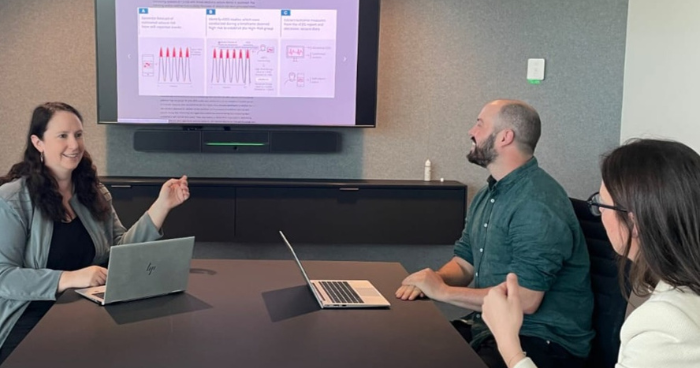 L-R: Dr Jodie Naim-Feil, Dr Ewan Nurse and Dr Pip Karoly. (Image: Supplied)
This study validated the new framework in over 5,000 vEEG datasets.
Called pro-ictal EEG scheduling, it estimates seizure likelihood based on the self-reported events of people with diagnosed or suspected epilepsy, which they log into an electronic seizure app prior to vEEG monitoring sessions. Using this approach, patient-specific seizure cycles can be identified and projected forward to identify future periods of increase seizure risk.
By arranging vEEG sessions to correspond with times of seizure likelihood, pro-ictal EEG scheduling can help to reduce the risk of misdiagnosis, diagnostic delay and inconclusive results.
Initial findings have been promising, providing strong evidence that pro-ictal EEG scheduling is a clinically relevant method for optimising the diagnostic results of vEEGs in both adults and children.
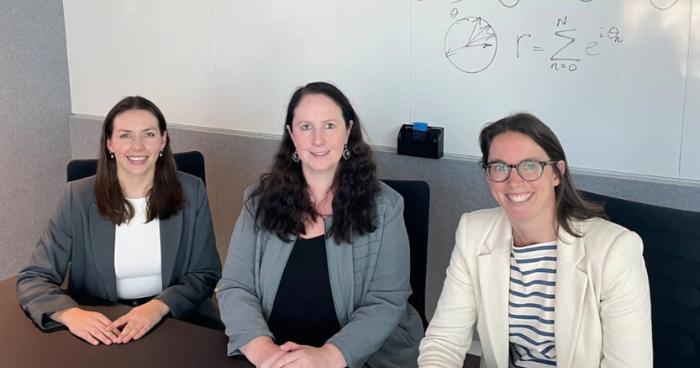 L-R: Dr Rachel Stirling, Dr Jodie Naim-Feil and Dr Pip Karoly. (Image: Supplied)
"If implemented effectively, it could improve the diagnosis and management experience for people with epilepsy or suspected neurological conditions," Dr Naim-Feil said.
“Issues with diagnosis and management can cause considerable psychological, economic and social stress for patients, while repeated hospital admissions and assessments put strain on the healthcare system.”
Current approaches to increase the diagnostic results of vEEGs can include medication withdrawal, triggering hyperventilation and sleep deprivation. While often effective, they require hospitalisation and increase the risk to patients.
 L-R: Dr Ewan Nurse, Dr Jodie Naim-Feil, Dr Pip Karoly and Dr Rachel Stirling. (Image: Supplied)
“This innovative approach uses individual-specific seizure patterns to provide insight into periods of increased seizure likelihood, which then can be applied to increase the chance of capturing seizure activity during vEEG monitoring,” Dr Naim-Feil said.
“This low-risk model holds potential to alleviate diagnostic difficulties associated with the unpredictability of seizure timing, with potential to greatly enhance the quality of life of those with epilepsy.”