Engineers cushion landslide barriers for global impact
Wrecking ball impact tests, modelling and a test case in Hong Kong have provided a University of Melbourne team and their collaborators at Swinburne University with the insights needed to help transform landslide barrier and wall design and improve landslide resilience around the world.
Led by Professor Nelson Lam from the Department of Infrastructure Engineering in the Faculty of Engineering and Information Technology (FEIT), the researchers have pinned down the optimal way to design concrete barriers and walls for better safety and reduced infrastructure damage – with an extra layer of cushioning being the crucial factor.
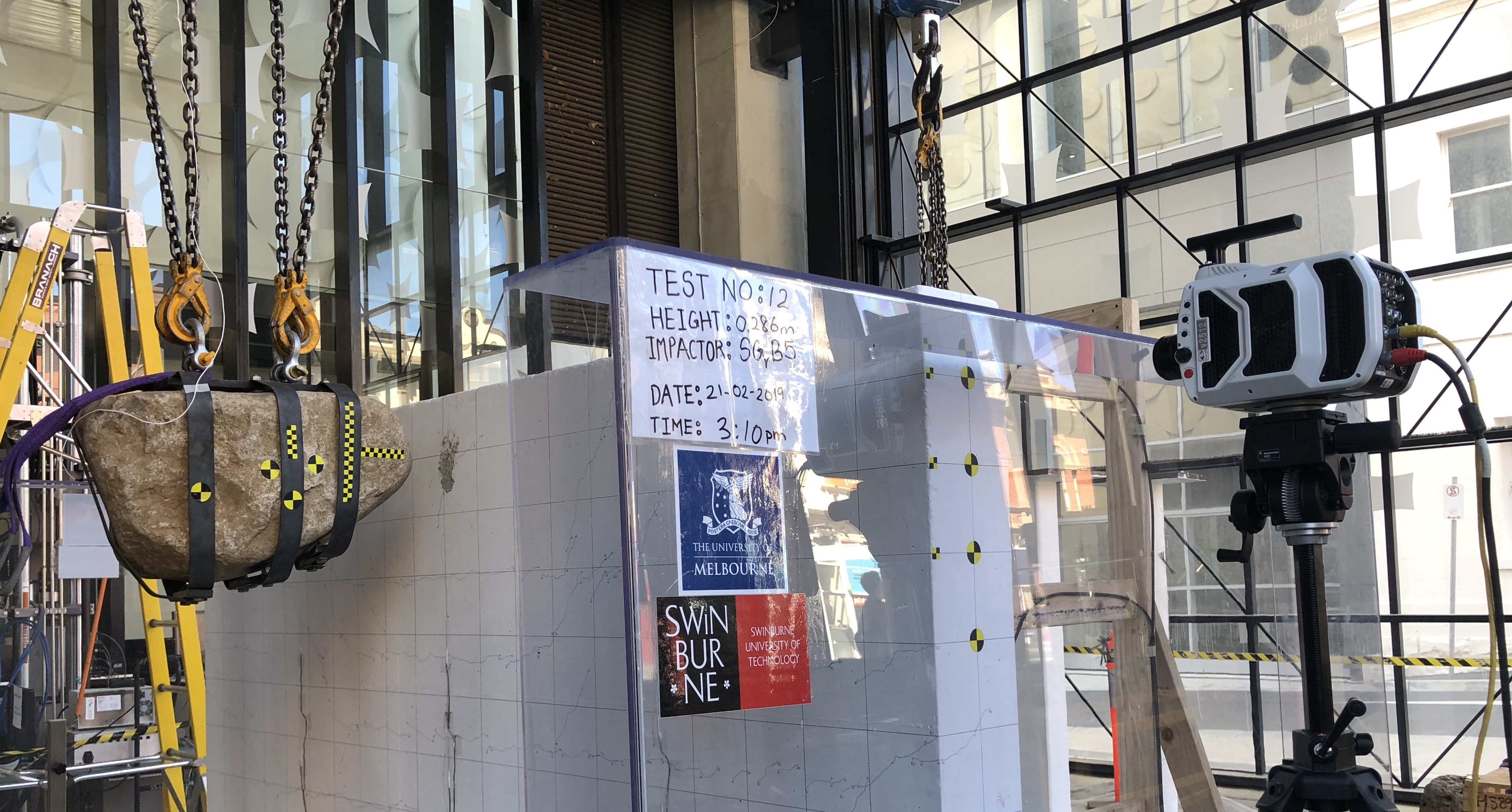
Testing with a solid boulder. Picture: Supplied
Knowing that a layer of ‘gabion’ – a wire mesh container filled with rocks, soil or other materials – in front of a reinforced concrete barrier can provide additional protection from fallen boulders, the team researched the important effect of repeated impacts on a barrier or wall and optimal barrier thickness.
They showed that a gabion cushion can achieve a very significant (50 - 90 per cent) reduction in barrier impact and provide protection for up to four successive strikes of falling boulders.
This led to design practice guidelines now successfully being used by engineers in Hong Kong, Australia, Switzerland, Japan, New Zealand and elsewhere.
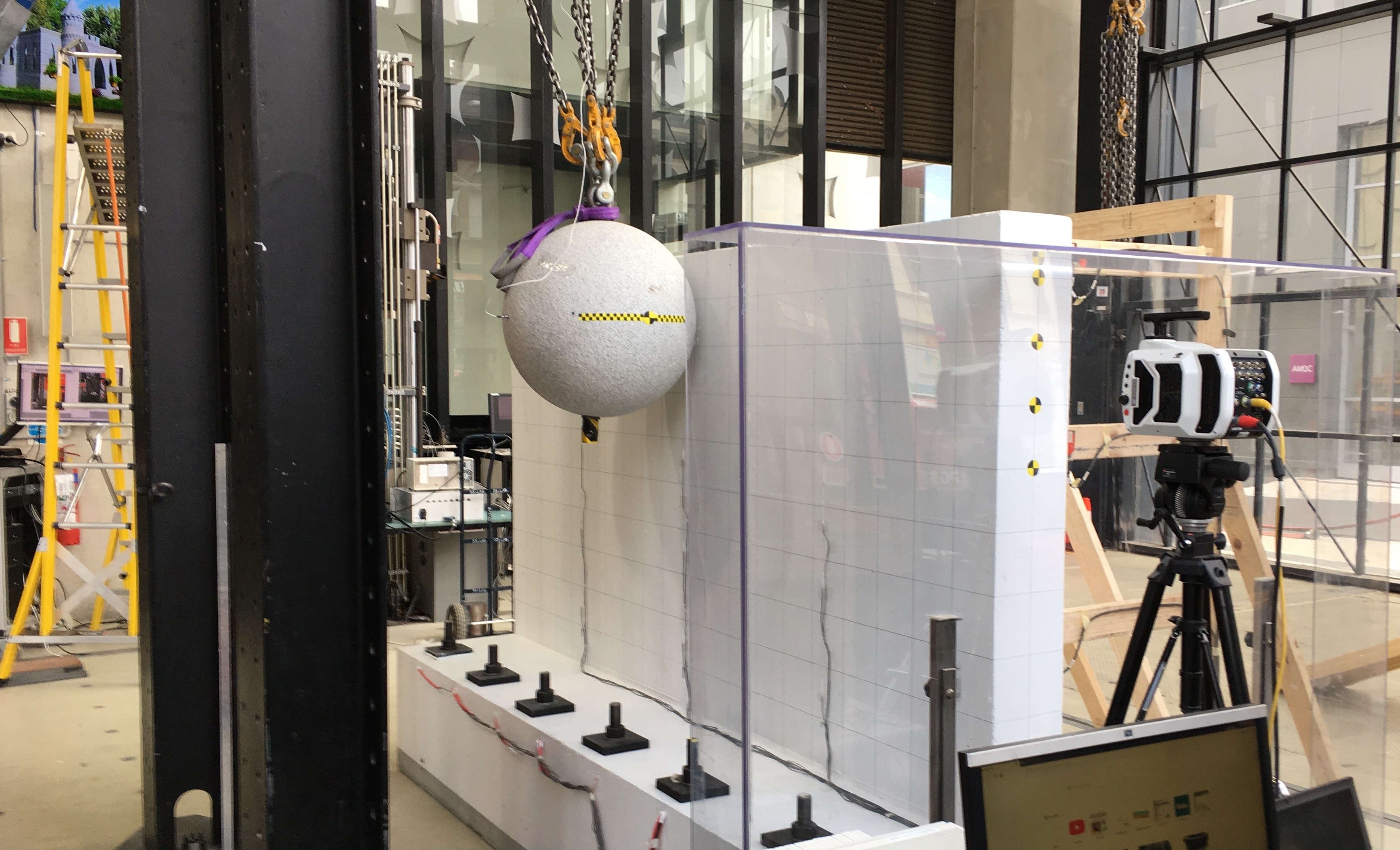
Testing with granite sphere. Picture: Supplied
Every year in Australia landslides cause millions of dollars of damage to buildings, roads, rail, pipelines or agricultural land, with some causing injuries and loss of life. They can occur anywhere in the world, with fatal events in China, the Philippines, Nepal, Papua New Guinea and India in 2024.
“There was a significant gap in knowledge in this field, but we were able to investigate, with funding from the Australian Research Council and the Hong Kong Special Administrative Region (HKSAR),” Professor Lam said.
“Dr Julian Kwan from the Civil Engineering and Development Department of HKSAR approached us for our unique expertise, so we were able to trial our design in a densely populated city with steep slopes that is highly susceptible to rockfalls.”
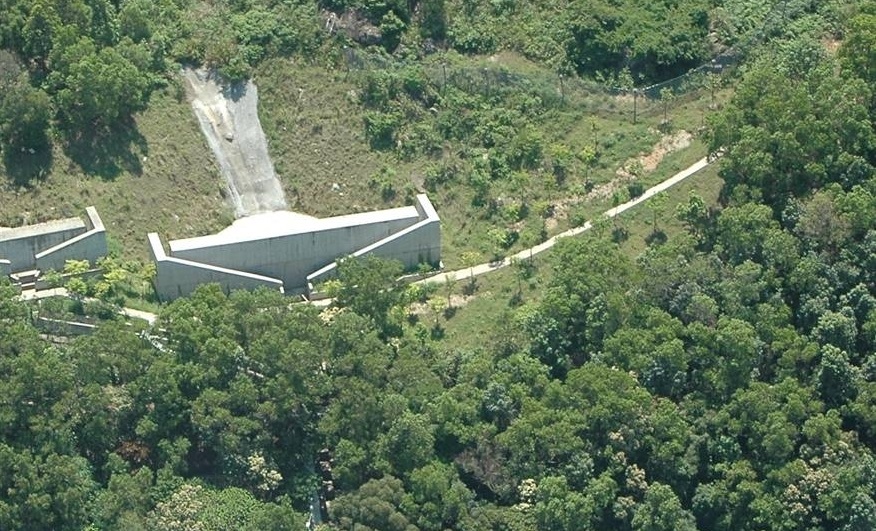
Reinforced concrete barriers to contain fallen boulders and debris on a hill slope in Hong Kong. Picture: Supplied
Professor Lam explained that over a decade ago, oversized and costly rockfall barriers had been constructed and installed in Hong Kong due to engineers’ lack of knowledge about the best ways to reduce ‘impact,’ which prompted the need to research optimised design to avoid overspending.
“During 2017–2020, with funding and a series of successful contracts between the University and the Government of Hong Kong SAR, our work resulted in modifications to their existing design regulations by providing cost-effective and improved techniques for designing rockfall barriers,” Professor Lam said.
“There was no widely accepted, reliable method in civil engineering anywhere for accurately predicting the impact of a solid moving object on concrete barriers or any other structure. The new walls in Hong Kong, based on our impact engineering principles, were reduced in thickness by a significant amount.
“This marked a breakthrough in low-cost barrier design, resolving concerns about wall breakage and ensuring stronger foundations that prevented walls from overturning. Our research was then analysed to create regulations focused on the construction of the walls.
"The knowledge we gained through this project has been used to improve rockfall and landslide protection in Hong Kong and is now available for engineering globally.”
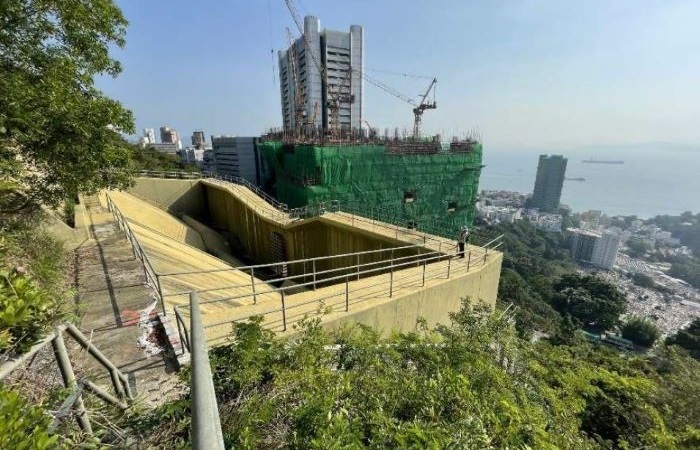
Reinforced concrete barriers in Hong Kong. Picture: Supplied
Professor Lam collaborated with FEIT’s Professor Mahdi Miri Disfani and Professor Tuan Ngo and Professor Emad Gad from Swinburne University on the project, and was assisted by Dr Jude Shalitha Perera, Dr Arnold Yong, Dr Zireen Zanoofar, Dr Abdul Majeed and Dr Scott Menegon, who formed an investigation team to conduct the impact tests.
The team’s design practise methods are available to civil engineers around the world in the textbook, "Collision Action on Structures," co-authored by Professor Lam, Dr Arnold CY Yong and Dr Scott J Menegon.

"Collision Action on Structures" book launch. From left: Dr Geoff Taplin (Retired Technical Director at AECOM and John Connell Gold Medal recipient), Professor Alex Babanin (Director, Centre of Disaster Management and Public Safety), co-authors Dr Scott Menegon, Dr Arnold Yong and Prof Nelson Lam, and Prof John Wilson (Emeritus Professor, Swinburne University of Technology). Picture: Supplied