Innovators hit the mark with Navi Medical Technologies
A small team of University of Melbourne engineering and MBA graduates and a clinician have developed and commercialised a clever medical device that is now on the cusp of international success.
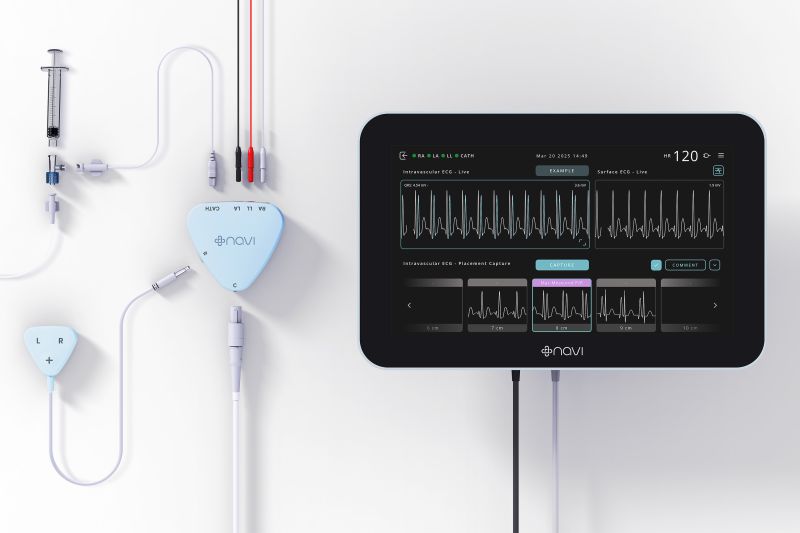
The team created the company Navi Medical Technologies for their Neonav® ECG Tip Location System, which improves care for babies and children needing life-saving central venous access devices (CVADs).
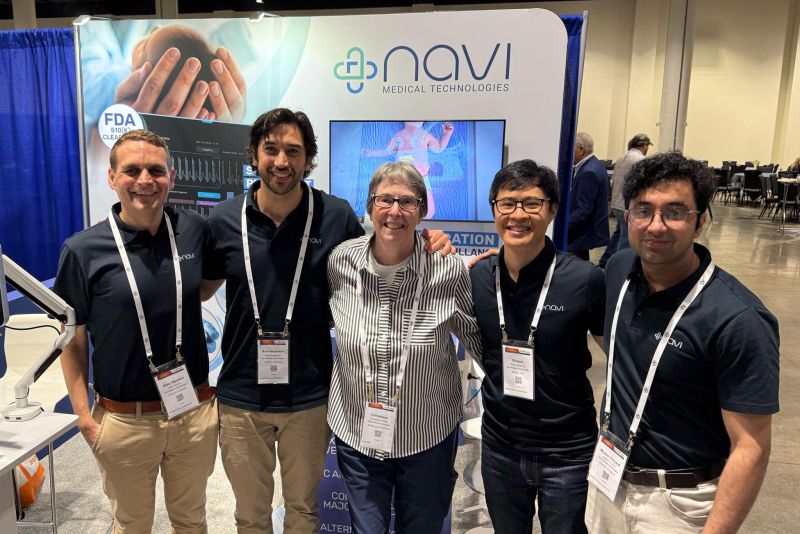
Members of the Navi Medical Technologies founding team: Alex Newton, CEO and Executive Director; Brad Bergmann, CFO; Associate Professor Christiane Theda, Chief Medical Officer and Executive Director; Shing Yue Sheung, Chief Operating Officer; and Mubin Yousuf, Chief Technical Officer.
Neonav® uses real-time ECG signal analysis and sophisticated software algorithms for clinicians to accurately place CVADs – reducing serious risks like misplacement or dislodgement – for preterm and term newborns and paediatric patients.
Neonav® was cleared in 2025 by the US Food and Drug Administration for use in US hospitals and is being rolled out to US customers.
The founding team includes two biomedical engineering and three MBA graduates who joined up through the University’s BioDesign Innovation program, and a neonatal intensive care clinician.
Navi co-founder and CEO Alex Newton, a former aerospace engineer, discovered the BioDesign Innovation course while studying his MBA at the Melbourne Business School.
“It is a myth that MedTech commercialisation can only be achieved by a large company,” Mr Newton said.
“At Navi, we're a team of first-time founders. We're dedicated and passionate about the area we work in, and we’ve been given the support we needed to succeed.”
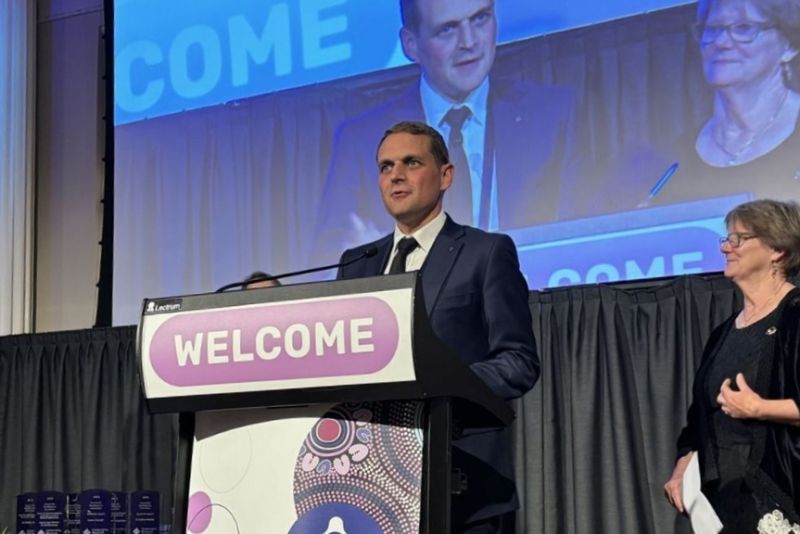
CEO and Executive Director at Navi Medical Technologies, Alex Newton.
He emphasised the importance of collaboration between universities, healthcare providers and industry to accelerate innovation in MedTech.
“We do outstanding research in Australia. We've got universities and research institutes that contribute to the absolute top of impact around the world. There's a real opportunity for us to commercialise more of that knowledge here and add value by taking it to market,” he said.
Mr Newton said he was delighted the University has developed a new Master of Medical Technology Innovation to nurture innovation and commercialisation in the medical technology space.
“The new Masters will amplify the benefits of the Biodesign Innovation program and will be an important way for more individuals to gain the skills and support needed to do this,” he said.
“Navi wouldn't be here today if it wasn't for the Biodesign Innovation course and the partnerships we developed around Parkville; with the University of Melbourne, which provided specialist input and has the ecosystem to supply skilled graduates, and the Royal Women's Hospital, where the clinical research was undertaken. And, of course, you need the industry partner to progress the innovation and bring it to market.”
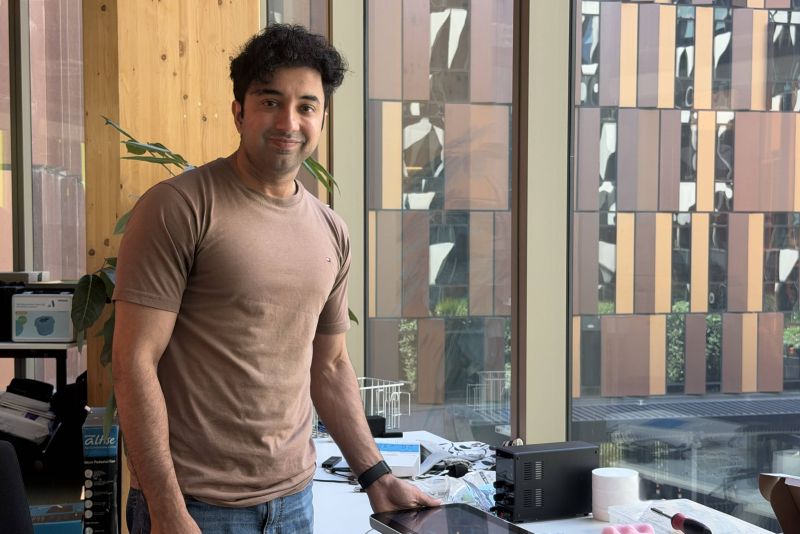
Chief Technical Officer at Navi Medical Technologies, Mubin Yousuf.
Navi co-founder and Chief Technical Officer, Mubin Yousuf, completed the BioDesign Innovation program during his Master of Engineering (Biomedical).
“We were guided through the BioDesign approach, first interviewing clinicians and observing them in their workplace to see the problems they were facing,” Mr Yousuf said.
"In BioDesign, you can’t start with an idea and try to fit it to a problem. You must start with the problem and try to find a solution accordingly. But to find a problem, you need a structure and this was stepped through in the course. Once we selected the problem in the ICU neonatal setting, we brainstormed solutions and then tested our solution to see if it was feasible from both technical and regulatory points of view.
“It was enormously important to consider the input from the clinicians. We went back quite a few times to iterate so that Neonav functioned as it was needed to.”
Mr Newton added that students considering careers in MedTech innovation will need to be diligent and prepared for a long journey.
“But there's a place for everyone,” he said. “We need people on the commercial side who understand sales and marketing. We need people on the research side who can do clinical research. We need engineers who are good with electronics and software. This is a multidisciplinary field, and we need people with all sorts of backgrounds and skills.”
The effort and patience paid off for the Navi team and feedback from recent evaluations in a US children's hospital was “very, very satisfying”.
“It was wonderful to see the happiness on the clinicians’ faces when they used our device and saw the time it saved and how much better it was for the patients,” Mr Yousuf said.
Applications for the Master of Medical Technology Innovation are now open for 2027. Read more here.