Researchers to progress pioneering wearable device to treat epilepsy
A smart, wearable, drug delivery system for transferring epilepsy drugs through the skin – the brainchild of University of Melbourne Professor Stan Skafidas – is set for an exciting new phase of development. The research team has been awarded a $3 million Commonwealth Government Cooperative Research Centre Project grant to continue developing the "patch" for clinical trials, expected to begin within 18 months.
The team recently hosted a visit by the Federal Assistant Minister for Health and Aged Care Ged Kearney at the Monash Institute of Pharmaceutical Sciences (MIPS) in Parkville.
 L - R: Professor Nicolas Voelcker; Dr Heather Benson; Professor Stan Skafidas; the Hon Ged Kearney MP, Assistant Minister Health and Aged Care and Assistant Minister for Indigenous Health; Remagine CEO Pat Kelly; Rene Koopman and Professor Chris Porter.
The system was created by Professor Skafidas, who is based in the Department of Electrical and Electronic Engineering in the Faculty of Engineering and Information Technology. Professor Skafidas also serves as Chief Technology Officer of local biotech company Remagine Labs, which, along with MIPS researchers and AK Clinical Research, are also on the development team.
“While commonly used drugs used to treat epilepsy can be very effective when taken properly, patients often have difficulty remembering to take their medication, which can lead to breakthrough seizures with serious medical and quality of life consequences,” Professor Skafidas said.
“By electronically delivering the drug through the skin via a wearable patch, we are able to precisely control the amount of medication delivered over a week-long period, making it straightforward for patients to comply.”
Thirty-six per cent of epilepsy patients have uncontrolled seizures, leading to increased risk of mortality, increased hospitalisations and reduced quality-of-life, and an estimated $12.3b cost to the Australian economy, primarily due to missed medications.
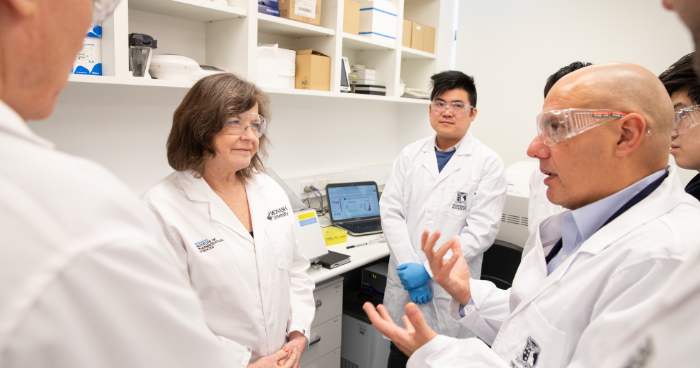 Professor Stan Skafidas (right) speaking to the Hon Ged Kearney MP, Assistant Minister, Health and Aged Care (left), with fellow University of Melbourne researcher Dr Hoa Zhe Yao (centre).
Monash University Professor Nicolas Voelcker's Nanomaterials, Biosensors and Drug Delivery lab leads the project's MIPS component. Professor Voelcker and his colleagues will strive to expand Remagine Labs' current platform, allowing the system to also deliver large molecule drugs.
Mr Patrick Kelly, CEO of Remagine Labs, said the lab’s current delivery system is focused on transporting small molecule drugs.
"We are pleased to be teaming up with Nico and his lab at MIPS to take this program to the next level and explore other drugs that could be suitably delivered to benefit people living with a range of chronic diseases,” Mr Kelly said.
Professor Chris Porter, Director of MIPS, said the visit from Assistant Minister Kearney was a fantastic opportunity to showcase what can be achieved through collaboration between industry and academic partners.
“What the team has achieved so far with this game-changing project is very exciting and we thank the Commonwealth Government for recognising its ongoing potential to significantly improve the lives of people living with epilepsy,” Professor Porter said.