'This will be our future': How three PhD students are studying digital transformation to reinvent their careers
Australia’s biopharmaceutical manufacturing sector is rapidly advancing, led by initiatives like the ARC Digital Bioprocess Development Hub (DBD Hub), which is empowering individuals to upskill in the AI and digital space, while driving innovation and boosting our nation's prosperity.
Here we share stories from three PhD students on this transformative journey.
After earning a double degree in business management and chemical engineering, Nyssa Nair settled into a decade-long career in hydrocarbon processing. But with refinery shutdowns and hiring freezes in her sector, she started to worry about her future stability.
"That was a big red flag for me and I wondered if this was where I wanted to commit my future. I was concerned about specialising in a very technical and niche area such as polypropylene manufacturing that wasn't really transferable," she said.
Taking a career break to care for her young children, Nair decided to pursue a more people-orientated and rewarding path through teaching. She chose to do a PhD so she could draw on her background and experience, and lecture at university level, and was immediately drawn to digital bioprocessing research at the DBD Hub.
"It sounded really, really interesting and felt like a smart way to future-proof my skills," she said.
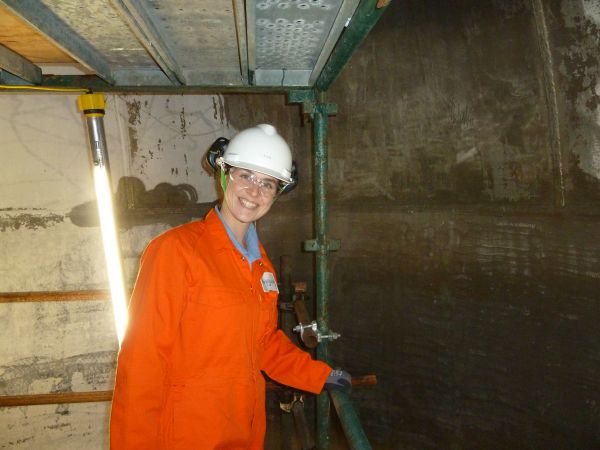
Nyssa Nair (formerly Process Engineer, LyondellBasell Australia) inside a Continuous Stirred Tank Reactor at the polypropylene facility in Geelong, Victoria, during a shutdown inspection in 2012.
Her thesis applies machine learning (ML) with chemical engineering and bioprocessing expertise to analyse data and improve understanding of bioprocesses to boost yield, productivity and quality in pharmaceutical production.
ML is an AI technique that uses algorithms to find patterns in data and predict new outcomes.
With little prior experience in cell culture or computer science, Nair describes her PhD as "a big learning curve", but credits the DBD Hub’s support and collaboration for building her confidence in the research.
"You’re not alone in this vast sea of information trying to make sense of it all," she said.
"That support and collaboration have enriched my study and understanding far beyond what I could have achieved on my own."
Bridging the divide between computer science and engineering
The DBD Hub is a five-year collaborative initiative dedicated to transforming Australia’s biopharmaceutical manufacturing sector by integrating digital technologies, artificial intelligence, automation and data analytics into bioprocessing techniques.
Led by the University of Melbourne, it brings together expertise from RMIT and University of Technology Sydney (UTS), alongside global tech leaders and top biopharmaceutical companies such as CSL Innovation, Cytiva (Global Life Sciences Solutions Australia) and Thermo Fisher Scientific (Patheon Biologics Australia). Together, they foster workforce development to drive the future of Australia’s biopharmaceutical manufacturing sector.
Sally Gras, University of Melbourne Professor and DBD Hub Director, said upskilling through the DBD Hub offers PhD students the opportunity to develop skills in science, engineering and digital technologies.
"As a nation, it is important that we increase the digital literacy of our student graduates and upskill our workforce to remain internationally competitive," she said. "This will increase student employability and assist the sector to address challenges, while helping to secure Australia’s future."
Nair said the DBD Hub has helped her "bridge the gap" between engineering and digital skills.
"There’s still a big divide between advances in computer science and machine learning, and the traditional technical skills we learn in chemical engineering.
"But it’s the integration of these skills and the seamless collaboration across disciplines within the Hub that gives it its real power. Bringing those together academically to teach future generations is now where my passion lies."
Nimish Pradhan was another who decided to change career course to pursue a PhD at the DBD Hub, keen to explore options beyond his graduate engineer role at a major hazard facility.
"I kept asking myself what I wanted to be doing in 10 years, and I decided I wanted to be in the pharmaceutical industry. I've always admired the biotech and pharmaceuticals worlds because they make life-saving medicine," he said.
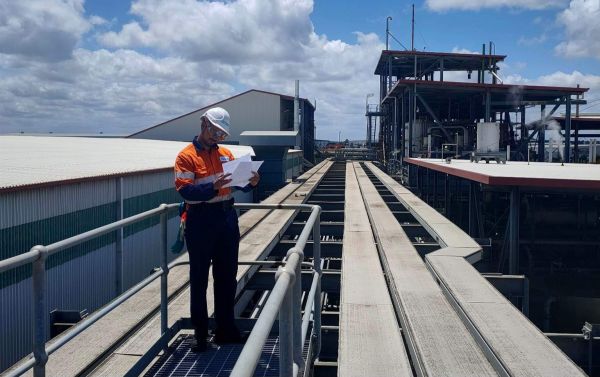
Nimish Pradhan in his former role as a Graduate Engineer at IXOM's ChlorAlkali plant, surveying pipelines and reviewing P&IDs to plan preventative maintenance works.
An opportunity through the DBD Hub allowed Pradhan to study a PhD at RMIT, focused on physicochemical characterisation of protein aggregation in pharmaceutical bioprocesses. His research aims to better understand what triggers protein aggregation during manufacturing and reduce risks in drug development. He collaborated closely with CSL product development teams to ensure practical outcomes.
Though career pivots can be daunting, Pradhan said the DBD Hub gave him vital skills in biopharmaceutical manufacturing and ML — essential for chemical engineers today.
"As the world evolves, I now understand the AI 'under the hood', which I didn't expect from the program. It feels great to upskill and avoid the risk of being left behind," he said.
Pradhan feels excited about a career offering variety, challenge and meaning.
"For me it's all about purpose-driven work and the Hub gave me the opportunity to chase that."
Transferable skills
Johnny Peng joined the DBD Hub after working several years as an actuary and data scientist. While proficient in applying existing algorithms, he yearned for the opportunity to develop new ML models.
"Data science is competitive, so I wanted to upskill and improve my career prospects," he said.
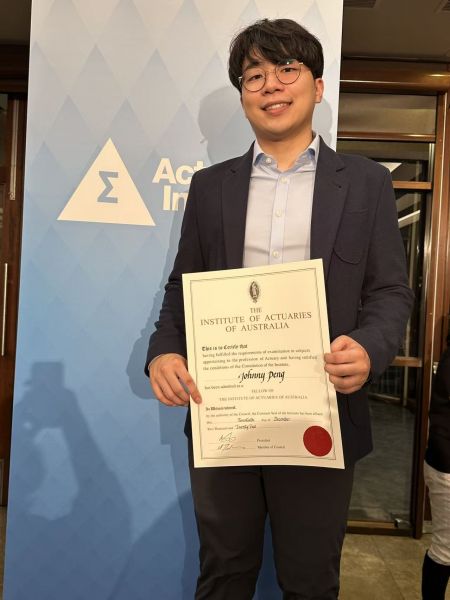
Johnny Peng receiving his certificate for admission as Fellow of the Institute of Actuaries of Australia in 2022.
Peng's PhD at UTS focuses on building predictive ML models for bioprocess indicators and product quality from limited data. Using advanced techniques like transfer learning and meta-learning, he aims to create digital twin software for bioprocess monitoring and optimisation — techniques that can also be applied to other processes, such as vaccine production or biotech processes that use cells.
"We work with complex, varied data sets and few observations. Many fields face this challenge, so what I’ve learned here can be applied to any future career."
Looking ahead, Peng aims to lead AI and ML projects that drive innovation in real-time monitoring and intelligent operations. He believes the AI and digital bioprocessing skills he's acquired at the DBD Hub have boosted his employability.
"We're using cutting-edge tech to publish frontier studies. Thanks to close collaboration with industry partners, I can already see our findings improving productivity in bioprocessing," he said.
Nair agrees her new skills applying ML to understand cell culture processes for bioproduction are highly transferable.
"There’s so much data sitting underutilised in processing industries because we lack the tools and skills to analyse it. The machine learning methods I’m learning help us interpret data, make predictions and understand limitations to improve productivity," she said.
"These skills apply to the bioprocess industry, but they are completely transferable to other industries that may share similar unit operations and processing challenges, such as food and beverage manufacturers. So getting graduate engineers fluent in these tools — this will be our future."