Biosystems Design subject brings industry and students together to design and develop medical technology
A University of Melbourne subject, Biosystems Design, is helping prepare students for exciting careers in the medical technology sector.
From inclusive technology to patient support, to managing pain thresholds and many other med tech projects, Bachelor of Science and Bachelor of Biomedicine students at the University are gaining real-world practical experience.
The subject provides an integrated capstone experience in the Bioengineering Systems major within the Bachelor of Science and Bachelor of Biomedicine degrees and involves undertaking design group projects from concept to implementation in a team-based project. In the subject, students learn to design and build medical devices and apply engineering processes to create medical devices that solve clinical problems and benefit people in need.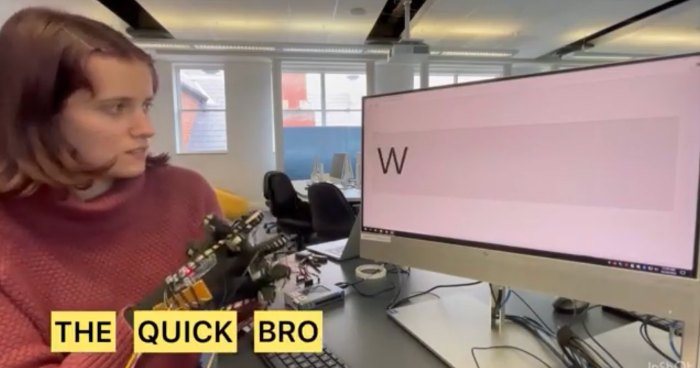
Avryl Hart demonstrates the 'Auslan sign glove' by Team 24 in 2022.
Dr Sam John, Senior Lecturer in the Department of Biomedical Engineering, has been teaching the Biosystems Design subject for the past two years. As the student cohort grew, Dr Yasmin Blunck joined the teaching team. Together they are developing an industry-integrated model for the subject.
“Australia’s healthcare sector is set to triple over the next decade,” Dr John said. “There is significant demand for med tech innovations and this subject will help build capability to develop and launch solutions and train new talent.”
"Industry immersion and hands-on experience complement the theoretical knowledge that the students gather throughout their degree and shows them first-hand the practicality and purpose of their studies," Dr Blunck said.
Projects have included developing an Australian Sign Language (Auslan) Sign Glove, which enables Auslan users to communicate with non-signers in their preferred language. The entire Auslan alphabet is recognised by a pair of gloves worn by the user through bending and pressure sensors. The Electromyography (EMG)-Enhanced Arm Rehab project utilises the signals of a diagnostic procedure that assesses the health of muscles and nerve cells to produce external assistive movement for rehabilitation patients; and the Reduction of Needlestick Pain from immunisations which lessens discomfort through a portable non-invasive vibration device.
The self-paced project's open-ended nature exposes students to the requirements for medical device design and development that exist in the workforce, such as ethics, safety and risk assessment, common sensors to detect medically relevant biomedical signals and acquisition, amplification and processing of biomedical sensor signals. The project also assists students in considering the nature of team diversity when working in health and medical technology design and development.
"Working in teams with an industry mentor fosters the development of other soft skills, such as communication and teamwork, in addition to the team and leadership qualities that prospective employers look for in our graduates," Dr Blunck said.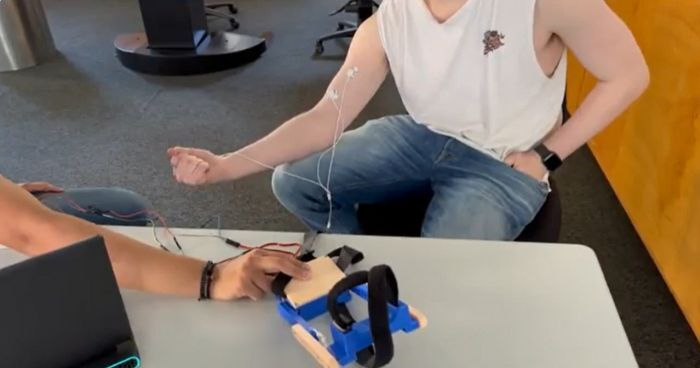
The 'EMG-enhanced arm rehab' project by Team 8 in 2022.
Keshav Mukund, a previous student of the subject, said that he was able to embrace trial and error through the subject’s hands-on approach.
“I’m now revisiting a lot of what I enjoyed in Biosystems Design as I work on my prototype for the capstone project. I owe a lot to this class for laying the groundwork that’s helping me confidently tackle advanced concepts.”
Sean Dominique, co-founder of chronic pain management startup Tensible and previous student of Biosystems Design said that the subject was an amazing opportunity for him to develop skills that he still uses today.
“Biosystems Design was the first flipped classroom in which I had the privilege to participate. I walked away with a wealth of skills and an improved sense of confidence in my ability to build something,” Sean said.
Sean is returning as a mentor to a new cohort of eager students, along with three other early-stage start-ups that have their genesis at the University: Acudent, AssistiveInnovation and EyeCP.
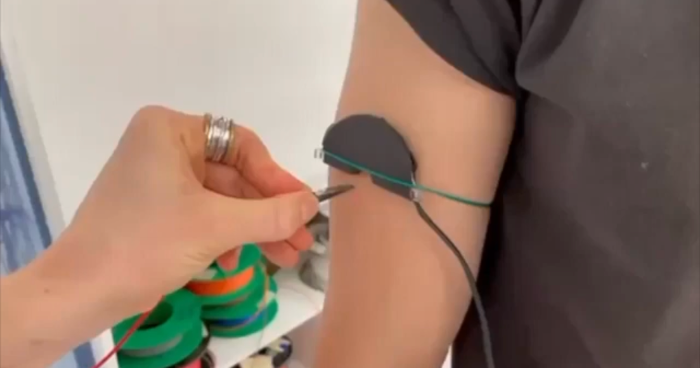 The 'reduction of needlestick pain' project by Team 17 in 2022.
“The Biosystems Design projects are focused on providing practical, project-based learning while helping early-stage start-ups de-risk their technology and give them a good chance of success,” Dr John said.
“This year, early-stage start-up companies propose projects around the product they aim to develop. The students work on building the product over 12 weeks. Each group has scheduled check-ins with the industry partner every four weeks. The actual development of the product is supported by the teaching team. At the end of the 12 weeks, the students present their work to the industry partners.”
“We are preparing our students with the knowledge, skills and expertise in design and development of medical technology to make a big difference to med tech companies, and the public who will benefit from better medical solutions.”
Find out more here: https://handbook.unimelb.edu.au/2023/subjects/bmen30008