Advancements in water allocation forecasting
Significant improvements in forecasting seasonal water allocations for the Murray River system can be achieved, delivering benefits for water users and resource managers, a collaborative research project has found.
Researchers from the University of Melbourne worked with the Mallee Regional Innovation Centre (MRIC), Goulburn–Murray Water, Murray–Darling Basin Authority and the Bureau of Meteorology to develop a new method of producing water allocation outlooks based on real-time weather and catchment data.
The project was a continuation of a pilot study conducted on the Goulburn River system, which also found the new method to be more accurate than the current scenario-based method in predicting allocations over the course of a season.
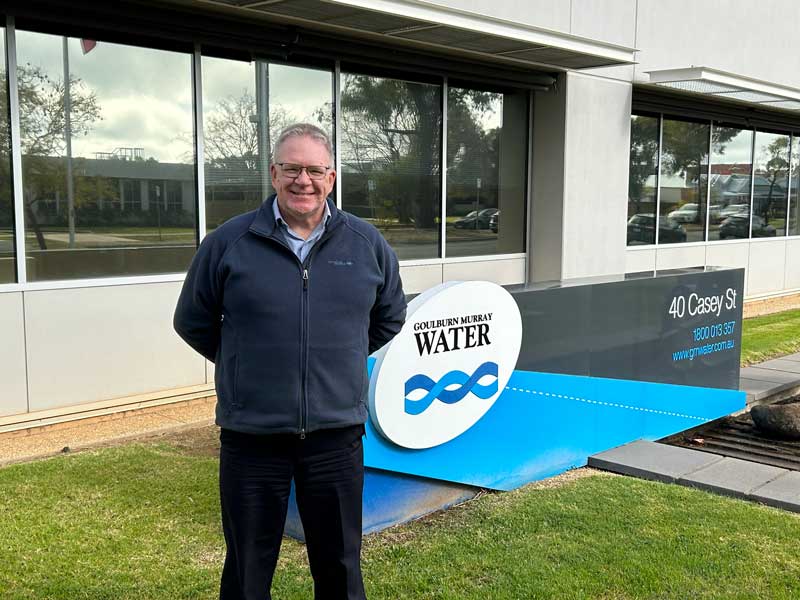
Northern Victoria resource manager Dr Mark Bailey.
“Transferring the techniques successfully to the Murray system, with its greater complexity of rules and water sharing, is a fantastic result for resource managers and water users,” Northern Victoria resource manager Dr Mark Bailey said.
“The work by the research team shows greater certainty about allocation forecasting can be achieved.
“In real world application, that means greater certainty about planning for water use and trading, which generates better cash flow and productivity across the water sector. That benefits all users, from irrigators to environmental water holders.”
University of Melbourne research fellow Dr Tristan Graham said the success of the project, which was funded by the Australian Government’s Future Drought Fund, was largely down to the active collaboration between industry partners.
“Seeing the real value in this work, the Mallee Regional Innovation Centre was able to bring organisations together and catalyse the work on the Murray, and as soon as it started, the input and engagement from industry has been really strong,” Tristan said.
We evaluated and calibrated the forecasting method against 10 years of recorded inflows, comparing its predictions to the actual allocations, and confirmed this method represents a clear advancement over the traditional approach to allocation announcements.
“The old method uses scenarios from historical climatic records – wet, average, dry, extreme dry, etc. – and the user has to decide the chance of each scenario happening. But now, using real-time information, we can determine the probability of what is likely to happen.
“Uncertainty can be crippling in drought management decision making. But this method can provide irrigators with more certainty about future water allocations, which will give them more confidence in their decisions about buying more water or drying things off.”
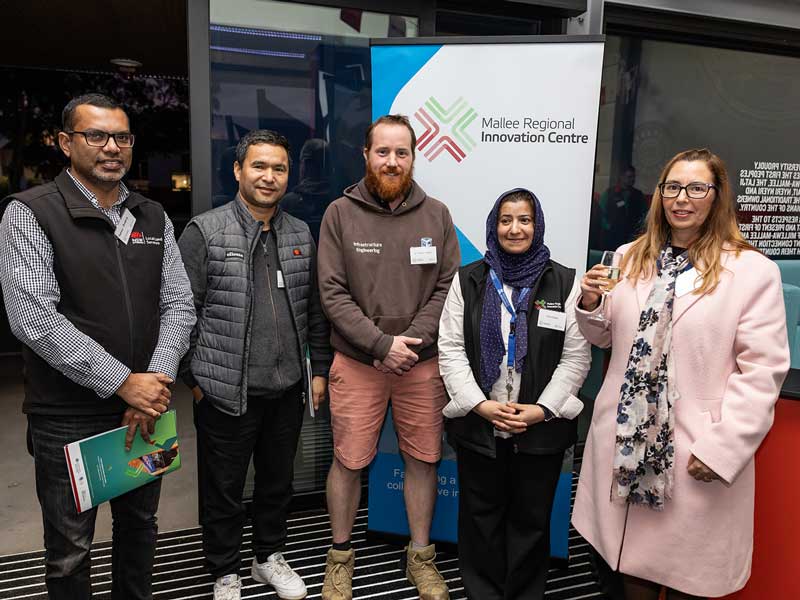
Salman Quddus from Local Land Services NSW, Mahmud Kare from NSW DPI, Tristan Graham, Alina Saeed from MRIC, and Katrina Watt from SuniTAFE at a Mildura industry networking event.
Tristan said he was enthusiastic about the future, with industry partners keen to implement the more certain approach to allocation announcements by trialling it alongside the current system to grow stakeholder confidence in the new method.
The research also found other applications that can benefit from the science.
“Through this collaboration, we have found further opportunities to improve processes and discussed how these tools could be used across more regions and products,” Tristan said.