New approach to empower community climate response
Growers manage uncertainty all the time, so talking about climate change as another risk element of their business could help experts engage an audience that stands to lose a lot from the impacts of changing climate conditions, according to Professor of Environmental Engineering Holger Maier.
The University of Adelaide researcher said people often switch off when they hear climate change information because it is overwhelming or isn’t directly relevant or actionable.
It’s an issue he is trying to overcome as part of a research project led by the One Basin CRC Mildura Hub, which is based within the Mallee Regional Innovation Centre.
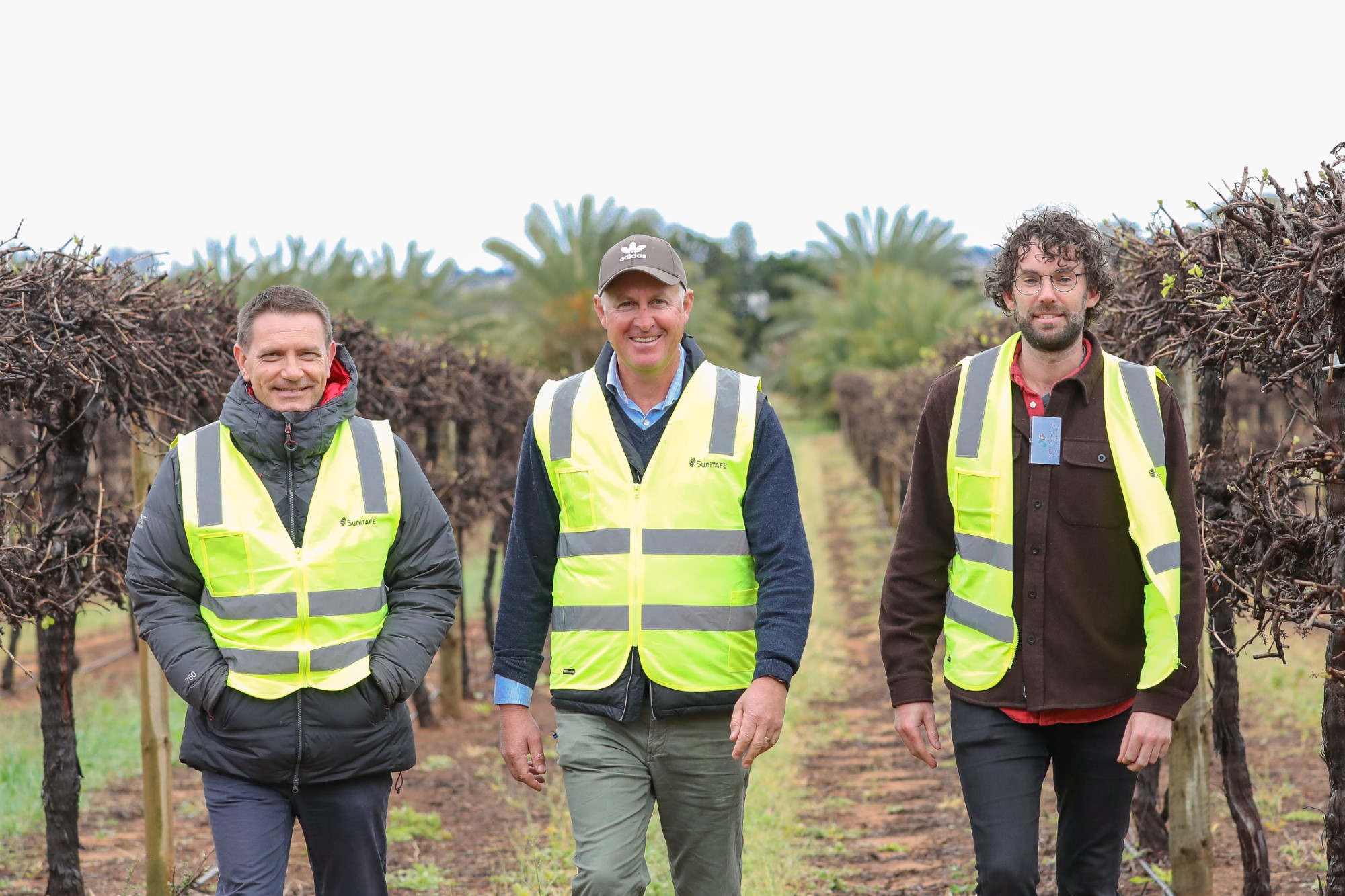
Professor Holger Maier, dried grape grower Warren Lloyd and project team member Dr Matthew Knowling visiting the SuniTAFE SMART Farm.
“There is a disconnect between the language coming from the climate science and the everyday decisions or plans people are making,” Holger said.
Through our work, we want to make climate information more actionable, and so it needs to be tailored and targeted for different industries and regions.
“We want to help people understand how the things they care most about are going to be affected by climate change, explore what changes would need to happen for people to be unable to maintain those things, and test the effectiveness of different adaptation strategies so people can make the best decisions they can.”
Led by Holger and Associate Professor Avril Horne from the University of Melbourne in partnership with the Murray–Darling Basin Authority, the One Basin CRC project Putting People at the Centre aims to transform the way climate risk assessments are done.
They hope the novel approach, which prioritises stakeholder engagement, will empower communities to act as well as encourage a shift towards more effective and inclusive climate adaptation practices.
Mallee growers, irrigators, water systems managers and other stakeholders interested in contributing to the research are invited to get in touch with Holger or Avril. The team also plans to hold stakeholder workshops down the track.
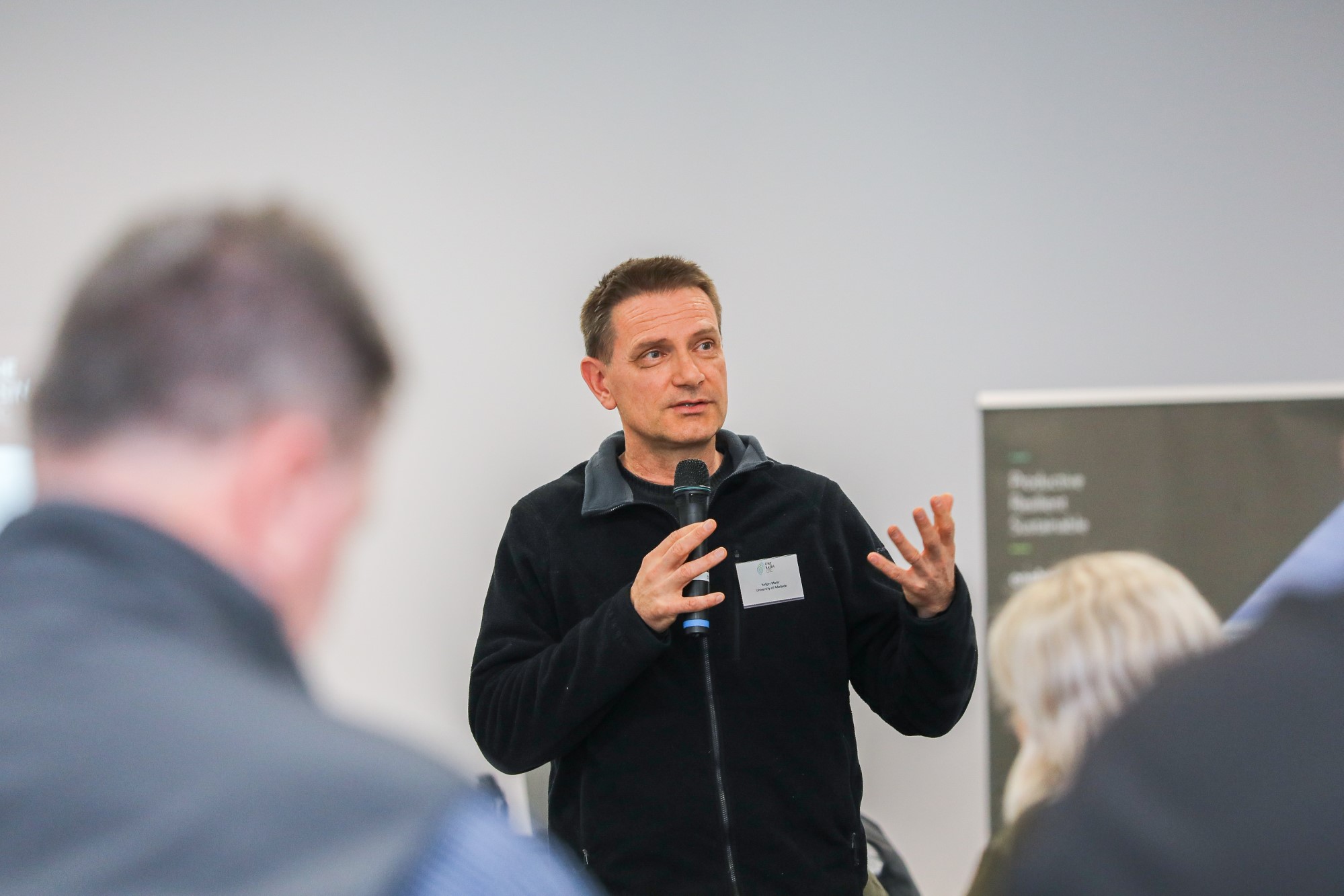
Professor Holger Maier.
“The more people are involved, the better we can understand what the issues for communities are and tailor our assessment tools and strategies to stakeholders’ needs and values,” Holger said.
“We know contributing to research projects can feel challenging and time consuming for people like growers who already have a big workload. But we want to flip that.
“It’s not about people helping us with our project, it’s about adding value to their work and helping to solve their problems. Our conversations begin with, ‘what are the things you are currently working on, what are the strategies, and how can we assist you?’.
We need to be listening and learning from the people on the ground because they have the knowledge and experience. We are already seeing how valuable a collaborative process is for getting people engaged in the project and articulating the problems communities are facing.
For Holger, being part of the One Basin CRC provides an important opportunity to contribute to cultural change in the climate space.
“What makes this CRC special is that from the outset the goal has been to make it a long-standing organisation that has a real impact, where the focus is not on the researchers but on ensuring end users realise the value of the research,” he said.
“So much in our lives is geared towards the short term, but being part of a 10-year CRC offers an opportunity to make a meaningful difference, particularly in regard to climate change, which is a longer-term challenge.”