Reducing the impact of algal blooms
University researchers, northern Victorian water corporations, and the Mallee Regional Innovation Centre have teamed up to investigate the build-up of blue-green algae in water treatment plants so as to manage any potential risks.
In recent years, more intense and persistent blooms of cyanobacteria, also known as blue-green algae, have been found in the Murray River and its tributaries.
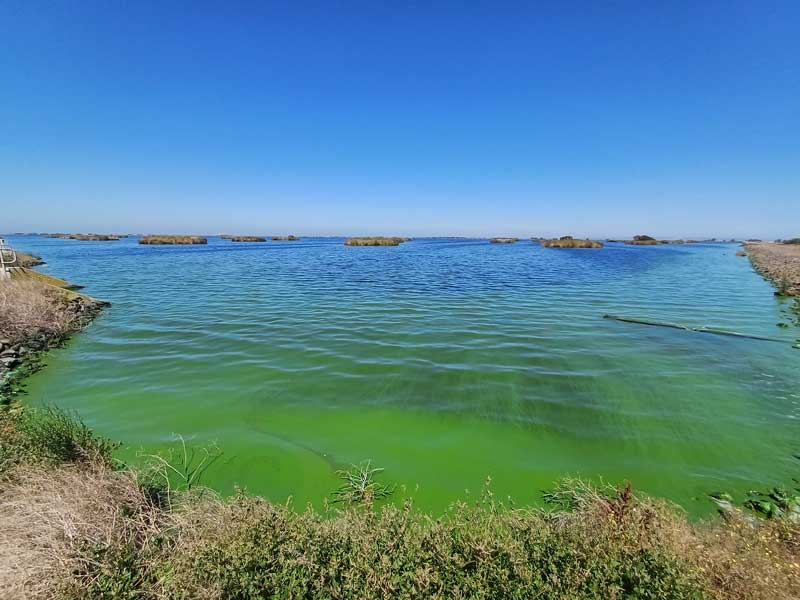
Toxic cyanobacterial bloom in a Victorian freshwater reservoir.
As the frequency and length of algal blooms are expected to only increase as a result of climate change and extreme events like floods, the project team is focused on understanding the challenges cyanobacteria present now and in the future.
Partnering on the project, which is funded by the Australian Government’s Future Drought Fund, are Monash University, the University of Melbourne, Coliban Water, Goulburn ValleyWater, Lower Murray Water, North East Water, and the Mallee Regional Innovation Centre.
According to Coliban Water’s senior water quality and regulatory advisor David Sheehan, the project is quite novel as it is based around understanding the presence of cyanobacteria across the full water treatment process.
“Rather than just testing for the presence of cyanobacteria and their toxins and metabolites in the raw water, this project will help us gain an understanding of how effectively individual water treatment processes remove cyanobacteria and where cyanobacteria might be accumulating within individual water treatment processes,” David said.
“We can then develop strategies to better manage any potential risks to drinking water quality that this may present.
This project was not initiated because of any safety concerns with water supply systems; rather it is helping us understand and prepare for ongoing future challenges presented by a warming and drying climate.
Monash University’s Dr Arash Zamyadi, who is the lead investigator on the project, said the team was collecting samples from the treatment plants and conducting advanced analysis for the full 2023/24 bloom season.
“We are going through the full treatment process, sampling from raw water to finished water, and then doing next-generation sequencing to capture the DNA footprint of cyanobacteria,” Arash said.
“It is important to follow the presence of cyanobacteria throughout a treatment plant to find the critical treatment points. By identifying those, they can make treatment adjustments or work out what new treatment to put in place to solve the problem.
“We also know that there are different strains or species of cyanobacteria and they all respond to treatment in different ways, so we need to find out what is in the plant.”
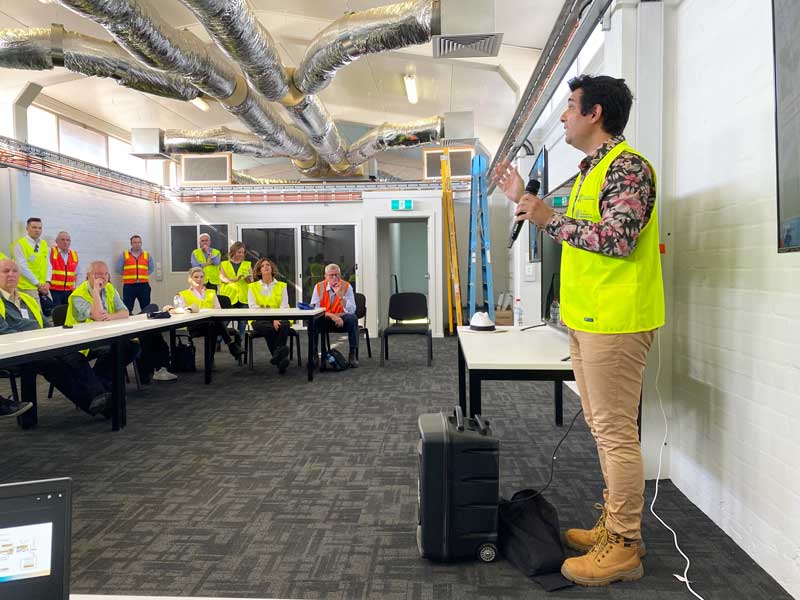
Dr Arash Zamyadi presenting in Mildura at the Lower Murray Water treatment plant to a visiting delegation.
Arash said once they had the critical treatment points identified, a report would provide some recommendations about treatment modifications and new technologies that could be tested.
“Preventing these blooms from occurring is the desired solution, but that is more of a longer-term plan,” he said.
“We are focusing on the treatment side, which we know in the long run is not going to solve the source problem, but it will help to ensure these water utilities can continue to provide clean water to the customers.”