Study reveals what attracts youth to agri-food careers
Passion, purpose and opportunities for ethical and social contribution are key drivers for young Victorians working in the agri-food sector, a new study has found.
About 450 people aged 15 to 35 shared their motivations for entering, staying in or leaving agricultural jobs as part of a research project helping to secure and support the next generation in farming and food careers.
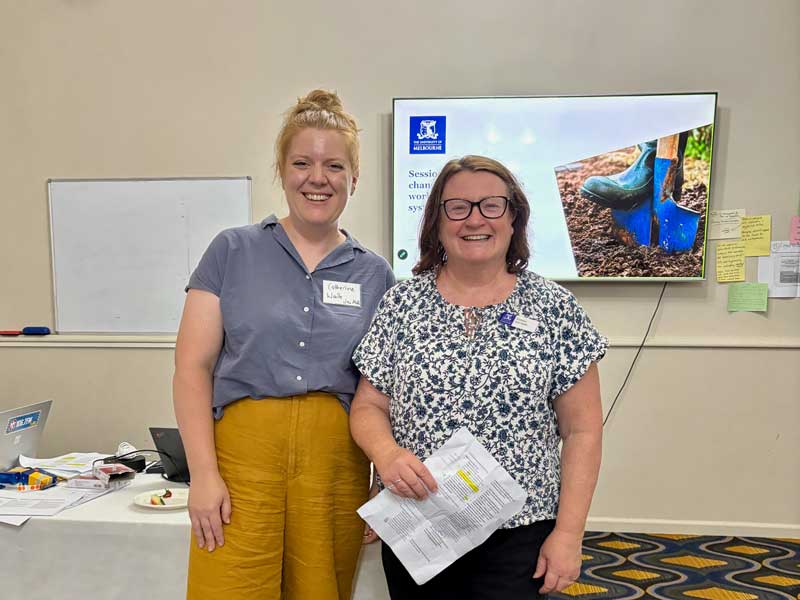
Research fellow Dr Catherine Waite and Rural Innovation Research Group lead Professor Ruth Nettle from the University of Melbourne at the Mildura project workshop in February 2026.
Insights from the project, led by Mallee Regional Innovation Centre partner the University of Melbourne, will be used to improve the sustainability and growth of the agri-food sector.
“For many of the young people we spoke to, their motivation to work in agriculture and stay committed to a particular career, in spite of the challenges they may face, was centred around their values and a moral sense of worth and purpose,” University of Melbourne research fellow Dr Catherine Waite said.
“A sense of national contribution came through strongly amongst the cohort and a passion for agriculture. For example, helping farmers to support the land, contributing to food security for Australians, and helping to put food on people’s plates that is ethically and environmentally responsibly sourced.”
Earlier this month, a roundtable was held in Mildura for stakeholders to reflect on the findings and discuss how they could be applied in the regional environment.
One of six roundtables held across the state, it brought together agricultural and horticultural organisations, peak industry bodies, the local learning and employment network, education providers, and service and retail businesses.
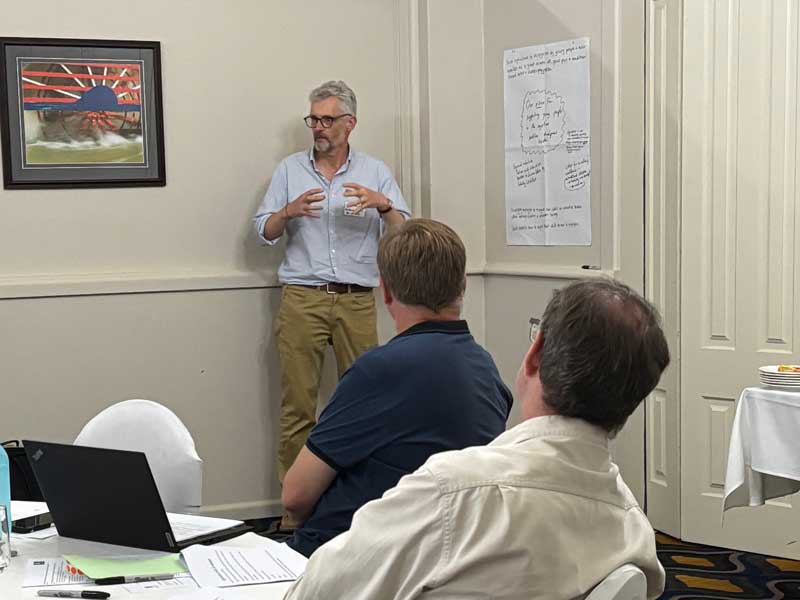
University of Melbourne senior lecturer in agriculture production systems Dr Michael Santhanam-Martin speaking at the Mildura project workshop.
“Many of the people who attended our stakeholder workshops are already doing important work in their regions to attract and retain young people in the agri-food workforce, but it is a persistent challenge,” Catherine said.
“Mildura was the first place we visited to talk to people who are working, studying and thinking about employment in farming and other agribusinesses, and our work has had a lot of support from the community and industry organisations.
As research that has heard from young people directly, it brings some rigor, consistency and transparency to what is happening across the broader horticulture and agriculture industries.
“People could come to the roundtables with a specific problem they are experiencing and see it reflected in the research data. They were then invited to discuss strategic actions that could be taken and how they could be implemented and who might be involved.
“This project can play a valuable role in bringing people and ideas together and helping communities to advance work that addresses these workforce challenges.”