2025 FEIT Indigenous Research and Teaching Innovation Grant Recipients
Congratulations to all past recipients of the FEIT Indigenous Research and Teaching Innovation Grant.
Grounded Futures: Indigenous Innovation in the Afterlife of Aircrafts
Lead Chief Investigator: Dr Madhurima Das, FEIT, Department of Mechanical Engineering
Co-Lead Investigator: Associate Professor Juliana Kaya Prpic, FEIT Indigenous Engineering Education Specialist
Co-Lead Investigator: Dr Madhurima Das, FEIT, Department of Mechanical Engineering
Co-Lead Investigator: Professor Katja Holtta-Otto, Department of Mechanical Engineering
Organisations:
- Centre for Appropriate Technology (CfAT)
- Arrernte community
- Qantas Airline
- The Faculty of Engineering and IT, University of Melbourne
- Boeing Aerostructures
Working in partnership with the Centre for Appropriate Technology (CfAT) and the Arrernte community, this project aims to identify and implement culturally and technologically appropriate ways to repurpose decommissioned aircraft components stored at the Alice Springs boneyard.
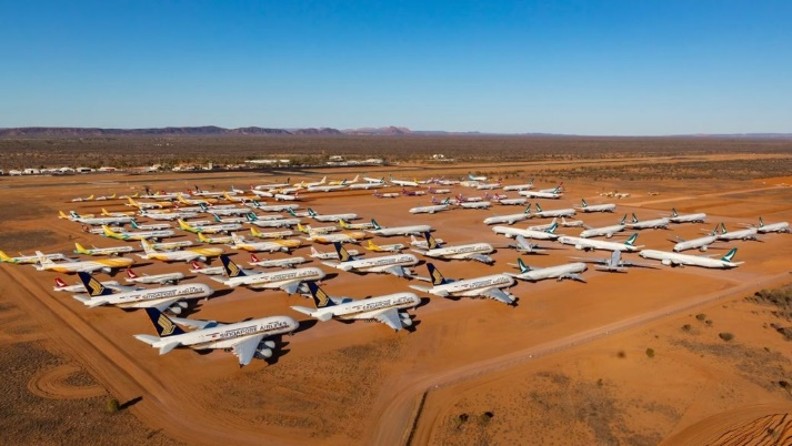
Aircraft parts, as engineered objects, are designed for precision, strength, and endurance, yet their afterlife is often limited to recycling, narrow forms of reuse, or landfill.
This project explores a more expansive approach, reframing repurposing of aircraft components through Indigenous knowledge systems, values, and local needs.
It also forms part of subject studies in ENGR90037: Engineering Capstone Project, where students prototype community-generated ideas for repurposing aircraft parts. Through this approach, the project will show how Indigenous knowledges and engineering education can come together in teaching initiatives to build capability, strengthen partnerships, and create long-term pathways for collaboration.
Qantas and Boeing have supported the project to assist with providing aircraft parts including decommissioned airline seats.
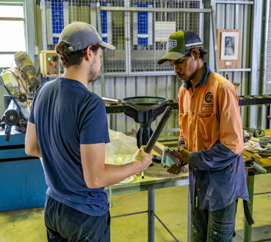
Capstone project students were able to travel and collaborate with Centre for Appropriate Technology (CfAT) and the Aboriginal workforce to discuss and workshop ideas for repurposing aircraft parts to address needs in their communities. Through these on Country visits, the project hopes to support future students to participate in community-orientated design projects.
The students are working on creating resources that help our crew to apply the repurposable Attribute Basis (RAB) framework to waste material we come across at work or on communities, that we can then repurpose to address community needs. We found some old washing machines laying around on the site to use for practice.
While still in the early stages, we're looking forward to continuing this partnership into the future so our crew can build their confidence and capacity in applying engineering theory into their day-to-day work!
- Centre for Appropriate Technology
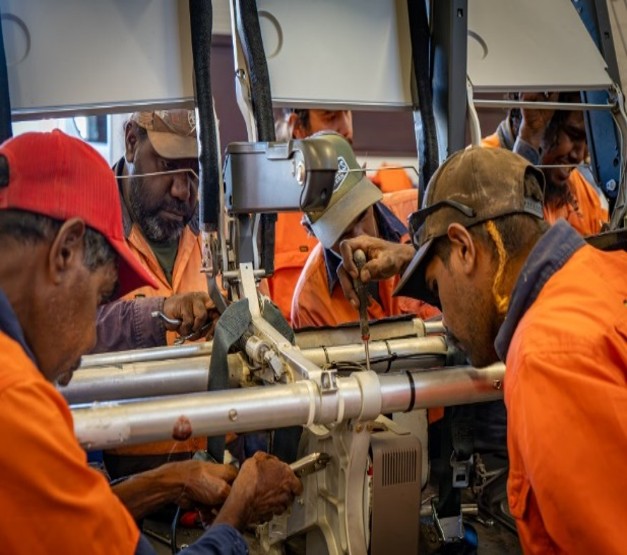
As an Aboriginal engineering student, this project gave me the opportunity to see Indigenous ways of knowing, being and doing embedded within an engineering process rather than treated as an addition to it. It showed that when we create space for different knowledge systems to work together, we develop a richer understanding of what innovation can look like.
- Tully Mahr, Masters of Mechanical Engineering Student
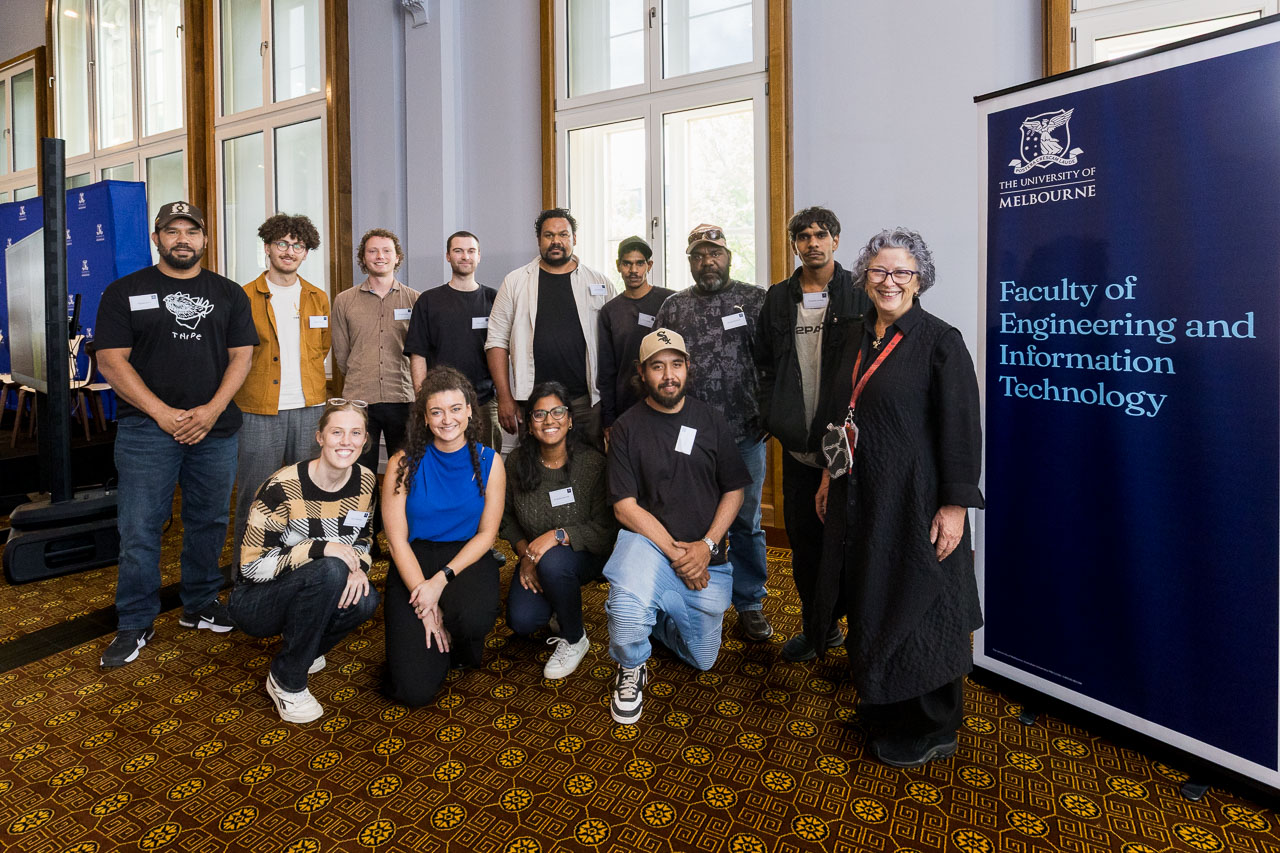
In 2025, representatives from the Centre for Appropriate Technology (CfAT) and the Arrernte community attended the National Indigenous Engineering Summit at the University of Melbourne campus.
While there, they reconnected with university engineering students they’ve been working alongside on their capstone projects, who recently came to Alice for a cross-cultural exchange. Together they’re exploring practical ways of how parts from decommissioned aircraft can be repurposed to benefit remote communities. Hearing from the crew about life in remote Australia has been invaluable to the students’ work and to the broader conversation about engineering that works for regional and remote contexts.
The Summit also gave the crew space to see how city environments afford more opportunity and think about how the skills they already use every day at CfAT are engineering in action. It was a chance to broaden horizons, build confidence, and imagine what’s possible.
Cultural heritage documentation: geospatial tool development and support for RAPs
Lead Chief Investigator: Dr Martin Tomko, FEIT, Department of Infrastructure Engineering
Working in partnership with the Gunditj Mirring Traditional Owners Aboriginal Corporation and the Wurundjeri Woi Wurrung Cultural Heritage Aboriginal Corporation, this project aims to continue capacity building to support the documentation and protection of cultural heritage. Both communities hold large and detailed datasets generated from past collaborations. This project aims to maintain ongoing geospatial analytical support to the communities and the development of tailored, re-usable training materials in open-source GIS tools to build data and analytical sovereignty.
If you have any further questions on the FEIT Indigenous Research and Teaching Innovation Grant please contact engit-indigenous@unimelb.edu.au