Hands On Engineering and IT
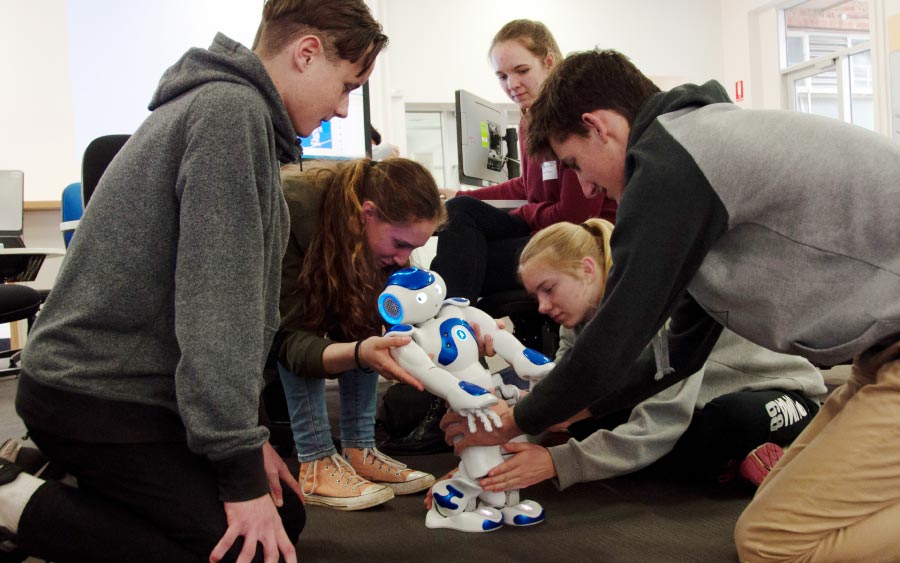
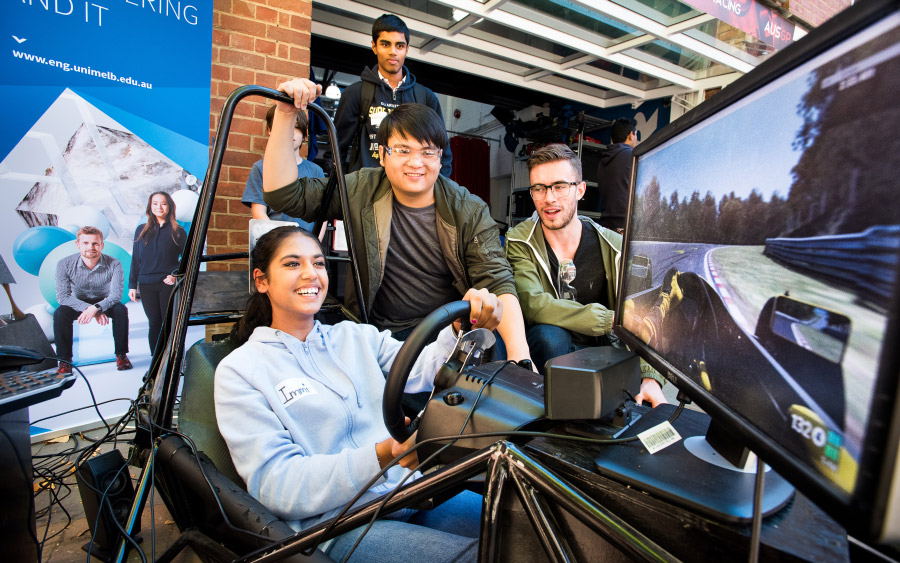
Introduce your Year 10 students to engineering and technology concepts and issues through our interactive workshops.
2026 dates
- 8 April, 2026
- 30 September, 2026
Registrations for the September 2026 workshops will open at the beginning of September.
Workshops
Sample of workshops delivered in previous years:
-
In this workshop you will explore your neighbourhood with a state-of-the-art Digital Twin platform. This platform integrates spatial, social and economic data, historic, real-time, and future. This workshop has 2 parts.
-
An introductory workshop for those who are interested in engineering. Hear from our current mechanical and electrical engineering students about their studies, the impact they are making through internships and work on a case study using engineering problem-solving techniques.
-
Imagine a runaway trolley raging down the tracks toward five people. You stand at a railway switch with the power to divert the trolley to another track, where just one person stands. Do you do it? What if there is a computer automated to make the decision? Professor Tim Miller discusses the ethics of autonomy using this and other examples.
-
Professor Andrew Ooi, Mechanical Engineer, and Dr Jillian Kenny, Civil Engineer, demonstrate how mathematics has been used in the fight against COVID 19.
-
Participants will learn the engineering concepts of bridge building guided by our resident bridge building expert. Materials required: paper, straws and sticky tape and tin-can weights.
-
In this session we will look into cryptographic techniques behind secure communication and privacy-preserving data analysis. You will get a chance to “break” simple encryption methods and participate in a protocol for protecting personal information.
-
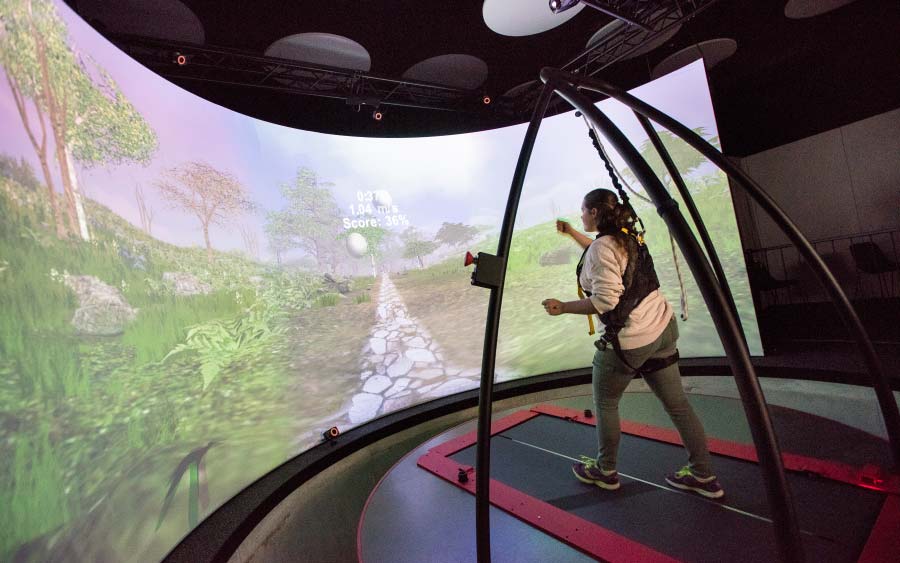
Step into the world of tomorrow with our masterclass! Discover the thrilling landscape of software engineering and AI, and unlock insights into high-demand IT careers that will shape industries for years to come. Join us as we uncover the magic of algorithms, artificial intelligence, virtual reality, games, and their real-world applications.
-
Professor Andrew Ooi, Mechanical Engineer at the University of Melbourne will take you through an introduction of engineering and encourage students to creatively develop a concept for re-engineering a common object. Engineers need to use creativity and critical thinking to solve problems
-
See how computer simulations can be used to address many engineering problems such as minimising noise from an aircraft, controlling temperature in a high rise building and optimising the design of stents to minimise the occurrence of heart attacks. In this session, an explanation is given on why these simulations are so expensive and why solving “real world” problems is still beyond the capability of the fastest supercomputers available today.
-
What is light? How do engineers utilise light? In this session we'll explore the fundamentals of lasers and their applications. You'll be able to dive into some of the research being conducted at Melbourne, including nanotechnology and the manufacturing of nanoscale materials and products.
-
The Prosthetic Leg workshop focuses on promoting the medical side of engineering and provides students with the knowledge and opportunity to think laterally and innovatively. Students learn about the social issues influencing the work of biomedical engineers in Cambodia and nations whose public health similarly deal with the repercussions of war. Students will acquire a general understanding on the importance of connectivity, load, and stability when designing a robust and fully functional mechanism. The activity also requires students to undergo a process of material selection while assessing them on cost, resources and effectiveness of design. In pairs, students in this workshop are provided with a specific time frame and limited resources in order to construct a prosthetic leg suitable for an amputee. Once the construction process has been finalised, one student of each pair will volunteer to test the design.
-
What makes rockets fly straight? What makes rockets fly far? Why use water to make the rocket fly? Students are challenged to design and build rockets from two-liter plastic soda bottles that travel as far and straight as possible or stay aloft as long as possible.
-
Terrestrial laser scanning is like using a special tool on the ground to make really detailed maps of the land and surroundings. It's similar to how planes use LIDAR to map from the sky, but this one works from the ground. This technology is relatively new and gives us super clear maps. Our Melbourne University Geomatics Student club (MUGS) will take students through the laser scanning workshop.
-
This session provides an introduction to the field of civil engineering building services, with a focus on new technologies and opportunities. Students will have the opportunity to practice with equipment and participate in a design challenge activity, with the aim of inspiring and equipping them with practical knowledge and experience in this field.
Enquiries
Email our Recruitment Coordinator: schoolsengagement-engit@unimelb.edu.au
Connect with us
Want to be the first to find out about our events for high school students? Connect with us and let us know which events you’d like to hear about.