Bionic limb project builds skills for biomedical engineering students
A custom-made robotic arm is extending University of Melbourne Biomedical Engineering students’ skills in combining computer programming with mechanical and electronic concepts to solve real-world biomedical engineering problems.
The robotic arm is used across four subjects in the Department of Biomedical Engineering: Applied Computation in Bioengineering, led by Teaching Fellow Dr Lionel Lam; Mechanics for Bioengineering, led by Associate Professor Vijay Rajagopal; Circuits and Systems, led by Senior Lecturer Dr Katie Davey; and Biosystems Design, led by Senior Lecturer Dr Sam John.
The bionic limb project is a unique offering in the Faculty of Engineering and Information Technology, in the biosystems major (Bachelor of Science and Bachelor of Biomedicine) and the Master of Biomedical Engineering courses. It enables students to work on the same project from multiple subjects, combining various subsystems into a larger whole.
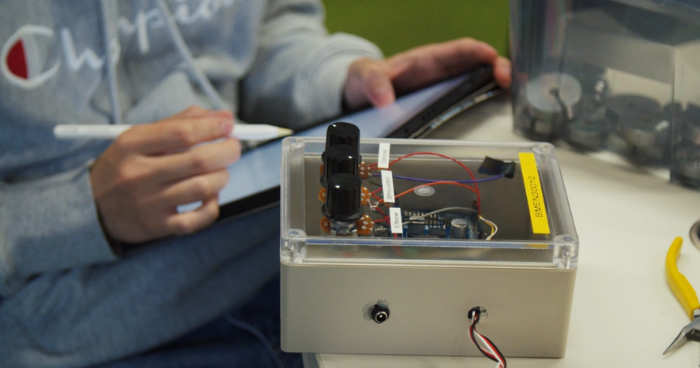
The bionic arm's electrical control circuit in Mechanics for Bioengineering.
Students get initial exposure to the bionic limb project in Applied Computation in Bioengineering. Here, students learn the fundamentals of computer programming in lectures and workshops, and then apply their learnings to create a computer animation of the robotic arm.
In Circuits and Systems, students learn the fundamentals of electrical circuits. Workshops provide students an opportunity to gain hands-on circuit experience and promote discourse with peers. Learning is enhanced via a pre-workshop circuit analysis, followed by circuit design and evaluation during the workshop. By applying this educational process to a real-world application, such as the bionic limb, students translate their conceptual learning to the workplace, building their confidence and work-readiness.
In Mechanics for Bioengineering, students conduct a group-based assignment to analyse and test the mechanical strength of the robotic arm. In a second assignment, students apply lessons learned in Applied Computation in Bioengineering and Mechanics for Bioengineering to determine the parameters that need to be set on the bionic arm to successfully play beer pong.

Bionic limb in Circuits and Systems.
By the time students enrol in Biosystems Design as a capstone subject in the Biosystems Major, they have integrated fundamentals of electrical circuits, mechanical physics and computer programming and are prepared to develop innovative engineering solutions to biomedical problems of their choosing.
Associate Professor Rajagopal said that many people are not aware of the breadth of skills a biomedical engineer needs for a successful career.
“With some hands-on experience of theoretical concepts, students are given the opportunity to engage in real-life problem solving and multidisciplinary teamwork through this project,” A/Prof Rajagopal said.

Tutor, Shabnam Shokouhi (standing) with students around the bionic limb.
Sonia, a student majoring in Biomedical Engineering Systems, said she found the project of great benefit.
“I have always wanted to make a practical contribution to the world and the bionic limb project makes it really fun to be in a class. By moving the bionic arm and adding weight on it, not only can I see what’s happening, but I also understand what’s going on behind the scenes,” she said.
Dr Lam said that in traditional teaching methods, students may compartmentalise concepts within a subject and find it difficult to apply them outside the classroom.

Sonia (second from right), working with her fellow students on the 3D-printed component of the bionic limb.
“With the aim of enhancing practical application of theoretical concepts, the bionic limb project helps students see connections between different subjects within biomedical engineering and be able to apply practical skills like those they will encounter in the workforce,” Dr Lam said.
A/ Prof Rajagopal said the course leaders presented the bionic limb project to the Biomedical Engineering Department Industry Advisory Group, who are very positive about potential future partnerships involving the robotic arm.
“We plan to involve these industry advisors in the project to increase awareness among our students about industry practices in biomedical engineering design and analysis,” he said.
"Such first-hand experiences boost students' morale and give them confidence to apply the skills learnt through biomedical engineering to employment opportunities."