Blue-green algae research leads to new science and discoveries
Novel discoveries made as part of a collaborative research project looking into the build-up of blue-green algae in regional Victorian water treatment plants could lead to the development of new and improved treatment strategies.
Researchers from Monash University and the University of Melbourne found that cyanobacteria, commonly known as blue-green algae, are not the only cause of taste and odour issues in drinking water, as previously thought.
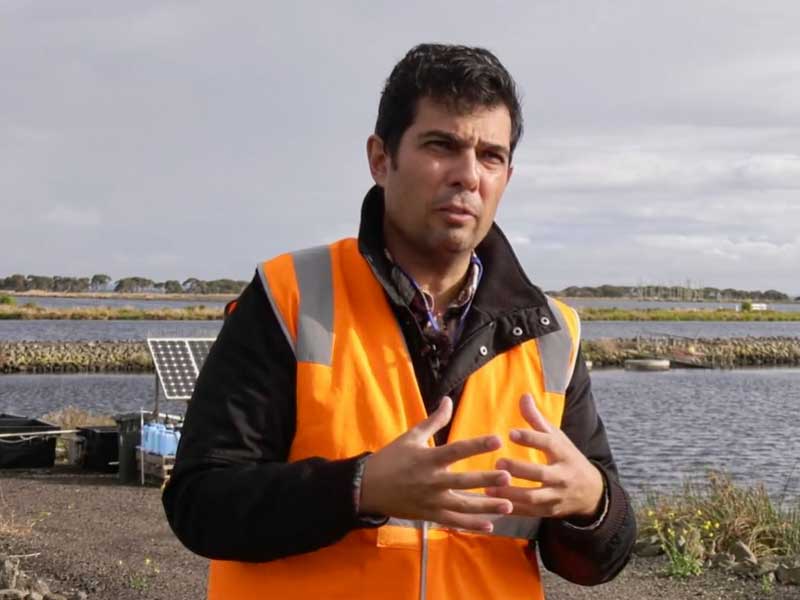
Dr Arash Zamyadi from Monash University.
By generating new applied scientific methods, the team discovered that other naturally occurring bacteria can also accumulate inside treatment processes and contribute to the issue.
Over the last cyanobacteria bloom season, from December 2023 to March 2024, samples were collected from Goulburn Valley Water, Coliban Water and Lower Murray Water at each stage of the treatment process – from source to tap.
“Now we have a better understanding of the microorganisms present throughout the full treatment process, we can address the challenges they present and better protect water quality,” the project’s lead investigator Dr Arash Zamyadi said.
The impact of algal blooms on water quality and treatment processes is a challenge faced by utilities worldwide, and algal blooms are of particular concern to Victorian regional communities during drought as their presence can restrict water supply.
“There are no concerns about the safety of drinking water. This study was a proactive collaboration between our two universities, the three water corporations and the Mallee Regional Innovation Centre to investigate the efficiency of the treatment process and prepare for ongoing future challenges presented by a changing climate.”

Toxic cyanobacterial bloom.
Arash, who is a senior lecturer in water engineering at Monash University and adjunct senior lecturer at the University of Melbourne, said the team had “pushed the limits of science” by devising new ways to identify the bacteria responsible.
“It can be challenging to look at the particles that accumulate inside treatment plants under a microscope, so we combined microscopy with more advanced next-generation sequencing – generating new applied scientific methods to accurately detect and quantify the bacteria present,” he said.
With this new knowledge, we can look at the treatment processes at each facility and properly assess what adjustments we need to make.
“This will be the focus of the third stage of the project.
“I am also excited to see how our discoveries will help people in other parts of the world with similar challenges. Northern Victoria, its people and water utilities are benefitting from our work, but this knowledge will go beyond the state and Australia to expand their understanding.”
A report on the research will be launched on 19 November at Willow and Ivie in Irymple.
Find out more and book your spot here.
This project was funded by the Australian Government’s Future Drought Fund.
Project partners included Monash University, the University of Melbourne, Coliban Water, Goulburn Valley Water, Lower Murray Water, the Mallee Regional Innovation Centre, and Water Research Australia.