Media Release - Farming for the future
A collaboration between the Mallee Regional Innovation Centre and SuniTAFE has seen the development of demonstration sites at the SuniTAFE Smart Farm, offering hands-on experiences of technologies that can assist with everyday farming challenges.
The sites were set up as part of a recently completed project that aimed to boost the drought preparedness of growers and communities engaged in wine grape, almond and citrus production.
Funded through the Federal Government’s Future Drought Fund, the project involved four Drought Resilience Adoption and Innovation Hubs – South Australia, Victoria, Tasmania and Southern NSW.
Mallee Regional Innovation Centre CEO Rebecca Wells said a memorandum of understanding (MoU) between Centre partners the University of Melbourne and SuniTAFE would ensure the longevity of the project demonstrations.
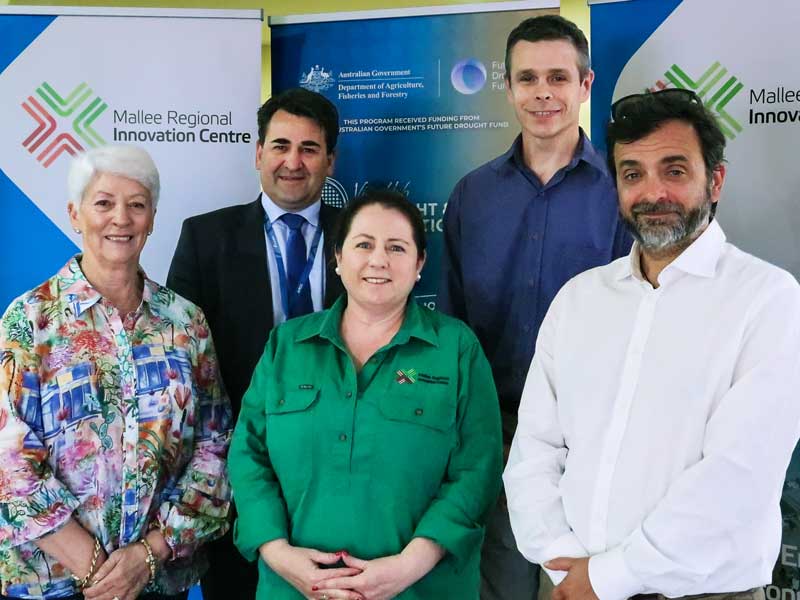
Leonie Burrows OAM, Brett Millington, Rebecca Wells, A/Prof Angus Webb and University of Melbourne Head of School Giovanni Turchini
“We have established six demonstration projects, with technologies including weather stations, soil moisture probes, water level monitors, geofencing equipment, and dashboards that pull all the data together – and they were all chosen based on their uniqueness and value to our local industries,” Ms Wells said.
“The signing of a three-year MoU by two of the Centre’s partners has strengthened our ability to continue working in this space and expanding the knowledge of these agricultural technology solutions in the region.
“It allows us to further engage with growers, industry, students and other stakeholders and create opportunities for them to experience the technology on site and ask questions of the providers and other users.
“People can also go to the Mallee Regional Innovation Centre website to find out key information about the products and make contact with the vendors if they want to know more.”
SuniTAFE operations general manager David Harris said the partnership with the Centre has allowed them to showcase to industry and students what a future in horticultural production could look like.
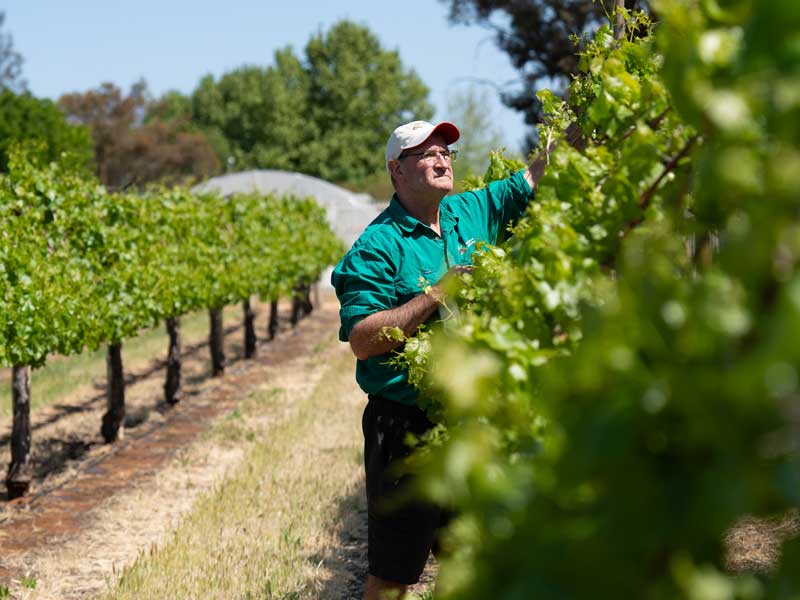
MRIC Research Assistant Paul McClure inspects some of the tech at the demonstration site
“The future is going to be remote sensors and sensors on machinery, with all the data coming back to a central point, and people interpreting what actions they need to take – or what they need to send the drone or remote spray vehicle out to do,” Mr Harris said.
“All those sorts of farm management decisions will come back to a control room rather than a farmer driving out on their tractor and turning on a valve.
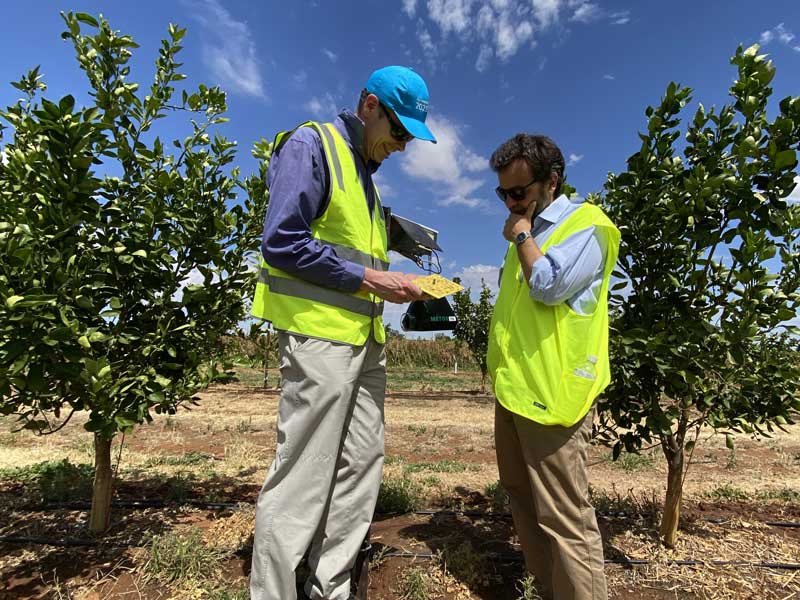
Associate Professor Angus Webb with Head of School Giovanni Turchini
“There are gaps in the industry for people with skills in data-related activities, and we want to show students that a career in horticulture doesn’t have to involve the traditional shovel and ute – it can be done from an airconditioned room.”
Visit the Mallee Regional Innovation Centre’s drought hub website to learn more about the demonstration sites.