Australia’s offshore regions, particularly those influenced by the westerly wind belt, hold substantial wind energy resources. Offshore Victoria, particularly in the Bass Strait, has been identified as an ideal location due to its stable wind patterns and high energy potential.
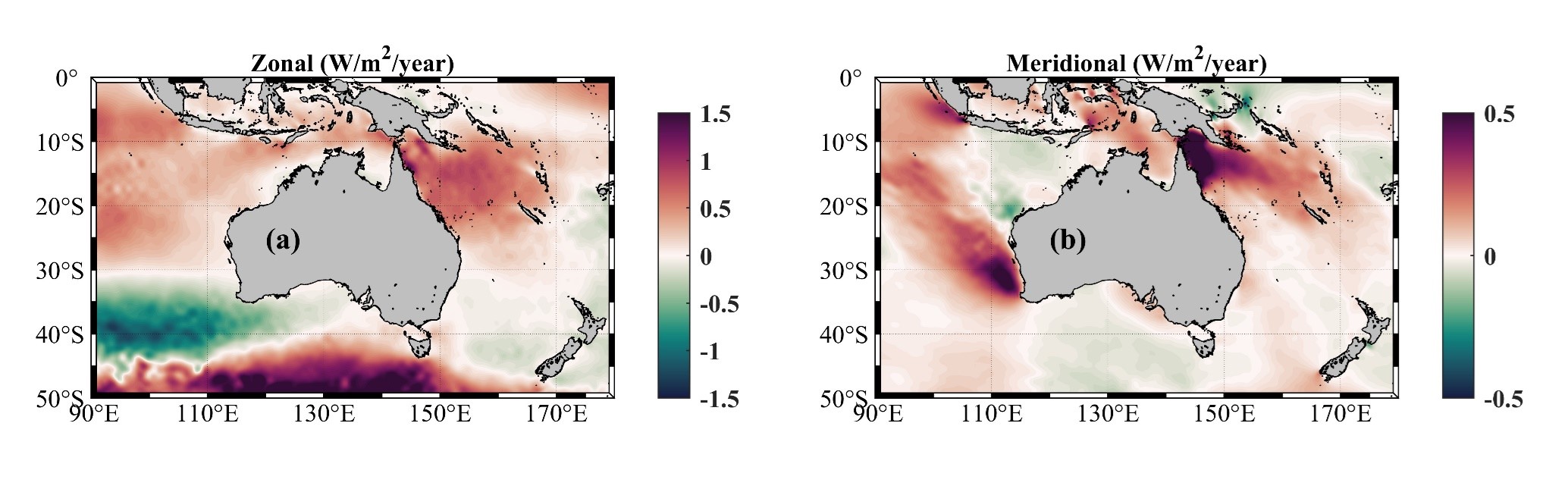
This research utilized 40 years of reanalysis data (1980–2019) to examine the long-term variability of wind energy off Australia’s coast. Seasonal variations in wind speed were observed, with the western coast reaching over 400 W/m² in January. By calculating the extreme values of Wind Energy Density (WED) using 10-meter wind speed, this research reveals maximum values of 918.9 W/m² and 1200.0 W/m² for the northeastern and western coasts of Australia over a 40-year period. Notably, the study identified a five-year periodic signal in Australia’s offshore wind field. The zonal WED in the southern coast exhibits an upward trend, primarily influenced by the westerly wind belt. Additionally, this research compares the differences in wind energy calculated from 100-meter wind speed versus 10-meter wind speed, finding that wind energy at 100-meter is not always greater than at 10 meters off the coast of Australia.
In summary, the central Bass Strait is a key area for wind energy development due to its stable wind energy potential. The findings of this research will guide future wind energy investments and support Australia's renewable energy goals.
Partners:
Prof Alexander V. Babanin, University of Melbourne & Dr Rui Li, University of Melbourne.