ARES Rocketry
Engineering excellence in student aerospace
The Aerospace and Rocket Engineering Society (ARES) is one of Australia’s leading student rocketry teams, building and launching high-power scientific rockets to compete on the international stage. We are a team of over 100 students, who collaborate and innovate to push the boundaries of student engineering in support of Australia’s growing aerospace industry.
We adopt a multidisciplinary approach to our work, recognising the diverse perspectives offered by students from all across the University of Melbourne. We aim to foster a culture of growth and development, giving Australia’s future space innovators an environment to test their limits and learn what aerospace has to offer them.
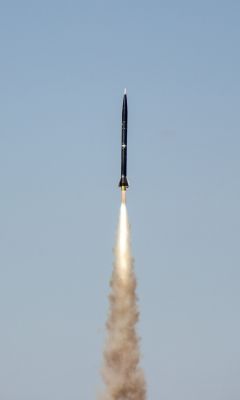
Founded in 2019 and building rockets since 2022, ARES has seen numerous successes both in terms of our technological development and international recognition. ARES competes in the International Rocket Engineering Competition (IREC), having launched four competition rockets (one 10k ft rocket and three 30k ft rockets) at previous competitions, notably placing 4th out of 152 teams in 2024. ARES will bring its first entirely student developed rocket, including a student-designed and built hybrid rocket engine, to IREC 2027.
ARES is a large, multidisciplinary team with members of all ages working on diverse aspects of rocket design and team operations. Learn more about who we are and how we operate!
By the numbers
115
Team members
6
Sub-teams
4
Competition rockets
60%
Undergraduate
40%
Master's or PhD
47%
1+ years
ARES Leadership
Discover our sub-teams
Our sub-teams are the beating heart of ARES, and are responsible for all the incredible work that gets done. Use the tabs below to learn more about each one!
Team Leads:
- Jules Seng
- Alexandra Margiolis
- Ennis Wong
The Aerostructures team designs and manufactures the rocket's airframe and internal structural components. The team combines aerodynamic analysis and mechanical design to develop and produce critical parts such as the nose cone, boat tail, and bulkheads. This involves tasks ranging from Computational Fluid Dynamics (CFD) and Computer-Aided Design (CAD) to Structural Simulation and hands-on Manufacturing. Past projects include the simulation of air brakes at various extensions to determine their drag profile, the development of retractable rail guides, and a resin-infused fiberglass recovery parachute compartment.
Core responsibilities:
- Computational Fluid Dynamics (CFD) – Optimising aerodynamic surfaces for stability and drag reduction, alongside flow visualisation and modelling the rocket’s drag curve
- Airframe Development - Using CAD and simulation tools to iterate the overall rocket design to align with competition parameters
- Internal Components - Liaising with other sub-teams to understand structural requirements, complete CAD modelling, and conduct Finite Element Analysis (FEA) to validate strengths
- Research and Development Projects – Investigating ways to advance Aerostructures design and manufacturing capabilities, such as improving CFD modelling techniques and developing new composite manufacturing methods
- Manufacturing – Fabricating parts using composite techniques such as resin infusion, and CNC processes to build the competition rocket
Team members collaborate closely and gain exposure to all skills throughout the full lifecycle of design, validation, and production. From CFD simulations to composite manufacturing, Aerostructures works across a range of mechanical engineering disciplines and fundamentals.


Team Leads:
- Brooke Dolan
- Steven Wang
The Propulsion team is responsible for the end-to-end design, development and testing of student-built rocket engines. This includes everything from subscale hardware to full-scale hybrid systems ready for flight integration. Previously, the team developed a sub-scale test stand, Data Acquisition (DAQ) & Control cabinet, and fluid system. The current focus is on hot fire testing and building the first ARES full-scale hybrid rocket engine for integration into a launch vehicle by the end of 2026.
Core responsibilities:
- Full-scale Test Stand Development – Design, manufacture and assemble static fire infrastructure and support equipment
- DAQ & Control – Integration of sensors, actuators, safety mechanisms and real-time control software for test operations
- Fuel Grain Manufacturing – Spin-casting paraffin wax-based fuels and experimenting with additives to improve performance
- Fluid Systems – Designing, building and testing high-pressure liquid & gas systems with safe operation
- Combustion Chamber Design – Thermo-fluid analysis and simulation of chamber and nozzle performance
- Modelling & Simulation – Development of analytical and computational models to predict engine behaviour and guide design decisions


Team Lead:
- Joshua Vaughan
Sub leads:
- Lachlan Power
- Auriella Fisher
- Nicholas Cotugno Morrison
The Avionics team develops and integrates electronic systems for both the rocket and its ground support equipment. At the core of these systems is the ARES Compute Platform, a fully interconnected system spanning hardware design, embedded software, ICT infrastructure, and web development. The team is currently developing a 2nd generation in-house flight computer with complimenting web platform for real time control, and flight data visualisation.
Core responsibilities:
- Rocket Avionics – Develop and program embedded avionics systems, including telemetry, radio communications, active aero controllers, data logging, and power management systems.
- Ground Station – Integrate ground support equipment and ICT infrastructure with rocket avionics, and DSLR camera.
- Data – Develop a Web interface for real time control, and flight data visualisation tools, and develop existing airbrake control systems.


Team Leads:
- Caroline Berg
- Jeet Bhandari
The Recovery team aims to achieve the safe descent and retrieval of the rocket, from altitudes up to 30,000 feet. Currently, the team has developed a single-separation, dual-deployment scheme featuring a CO2 separation system, with a 3-ring release mechanism, and line cutters for precision ejection of the parachutes.
Currently, the team is focusing heavily on designing and researching an improved recovery system. The new system will build on the existing foundation, concentrating on creating reliable and mechanically sound infrastructure for future rockets. Furthermore, we’re constantly improving our ability to manufacture components such as deployment bags, with a focus on creating in-house parachutes.
Core responsibilities:
- Mechanical System Design - CAD creation of systems such as line cutters, CO2 ejection parts, and other flight-critical recovery components
- Hands-on Fabrication - Sewing and creation of parachute and deployment assemblies
- Results Synthesis – MATLAB scripting and data analysis
- Real-World Applications – Continual hands-on testing and field deployment of recovery system


Team Lead:
- Charlton Hammond
The Payload team develops an experimental scientific payload that rides on the competition rocket, investigating technologies relevant to space applications.
Previous payloads have included an award-winning investigation into the effects of high acceleration flight on bacteria using Raman spectroscopy, and creating a surgical robotic arm that can perform high-precision surgery under high acceleration flight using a quad-arm control mechanism.
Core responsibilities:
- Electronic Design – PCB development for sensor integration and power management utilising Altium
- Mechanical and Structural Design – Using CAD software to design, prototype, and analyse the payload
- Manufacturing and Testing – Including metal work, soldering and 3D printing
- Software Design – Writing code to communicate with and control the various sensors and actuators, perform data processing, and wireless communication


Team Lead:
- Amelia Liu
The Operations & Logistics sub-team drives the strategic coordination and operational execution of the team’s initiatives. This sub-team ensures that ARES operates efficiently, fosters external partnerships that are essential to the construction of the rocket, and effectively communicates the team’s endeavours and knowledge to relevant stakeholders.
Core responsibilities:
- Stakeholder and Partnership Engagement - Securing and maintaining sponsorships with new and existing partners
- Logistics Organisation – Planning logistics for travel and competition entry
- Internal Collaboration – Liaising with the Faculty of Engineering & Information Technology
- Merchandising – Designing and producing team merchandise
- Videography and Marketing – Managing social media, filming, editing videos, and creating promotional materials


ARES acknowledges that our accomplishments would not be possible without the invaluable ongoing support of our sponsors. We extend our heartfelt gratitude to all our partners for their generous contributions, which have been instrumental in bringing our rocketry projects to life. Their unwavering support and commitment has not only enabled us to achieve our milestones but has also provided our team members with invaluable learning experiences and unparalleled opportunities for growth. Their contributions have helped make the team what it is today. We've been incredibly fortunate to have received such strong support.
Platinum Sponsors
The University of Melbourne
ARES would not be able to operate without the ongoing support of the University of Melbourne. ARES has ongoing affiliations with both the Faculty of Engineering and Information Technology (FEIT), as well as the University of Melbourne Student Union (UMSU). FEIT provides ARES with funding and access to workspaces and resources that are vital to the success of our projects. The University's world class facilities and academic support are key to ARES' continuing success. We thank the University of Melbourne for their support, and are proud to be able to represent them on the world stage.
Learn more
Blackmagic Design
Blackmagic Design supply ARES with industry-standard cinema cameras and equipment for capturing media. Their high-resolution, high-speed cameras are crucial for capturing detailed footage of ARES' hybrid rocket engine tests for diagnostics, as well as sharing the team's feats with the world. Melbourne-based, Blackmagic are a highly valued local partner whose unmatched cinema equipment routinely withstands the harshest tests ARES can throw at it.
Learn more
MCHND
MCHND Pty Ltd have been supplying ARES with high-quality CNC machined parts since 2024. They have contributed immensely our competition rockets since then, as well as our hybrid rocket development program. Their extensive in-kind contribution and close partnership have been key to ARES' innovation, engineering rigour, and success. Based in Adelaide, MCHND's technical expertise, world-class equipment, and wonderful team allow ARES to bring our design ideas to life.
Learn moreGold Sponors
Epsilon3
Epsilon3 provide ARES with procedural and product management software that is key to mission success during complex launch operations. ARES uses Espilon3 in the field to ensure mistakes don't get made during mission-critical procedures.
Learn more
Pacific Automation
Pacific Automation provides ARES with valves, fittings, and hardware for the team's hybrid rocket program. This equipment is invaluable to the development of our novel propulsion systems, which require high-quality components to work under extreme conditions.
Learn more
LabJack
LabJack make data acquisition solutions which form the backbone of ARES' hybrid ground support equipment. Designing and characterising rocket engines requires high-fidelity data, which LabJack's equipment allows ARES to collect and process.
Learn more
80/20 Australia
80/20 Australia provide ARES with configurable T-slot aluminium extrusion and hardware which the team uses to construct its hybrid GSE cart, rocket engine test stand, and various rocket components. The ease of rapid configuration of 80/20 Australia's extrusion allows rapid development of complex systems.
Learn more
BOC
BOC provide ARES with the gas needed to conduct our hybrid engine tests and launches. Gas supply can determine the outcome of a launch, so BOC's reliable delivery and cylinder filling allow ARES to ensure mission preparedness.
Learn more
Synnax
Synnax's data and operations software is used by ARES to control and communicate with our hybrid rocket engines. Synnax seamlessly handles data acquisition and actuator control in mission- and safety-critical environments, ensuring reliable system operation and data collection.
Learn more
Weidmuller
Weidmuller Australia provide ARES with high-quality DIN-mount industrial electronics and interconnects. Weidmuller equipment is used to build and connect the team's data acquisition and control cabinet, allowing reliable data and communications and facilitating critical safety interrupt circuitry.
Learn more
GLH Systems
GLH Systems provides ARES with invaluable expertise in skydiving and parachute techniques for the development of our recovery systems. GLH are experts in rigging and skydiving, and have provided invaluable insight into our projects.
Learn more
Onshape
Onshape is ARES' primary CAD software, used for all modelling and development. Onshape's cloud-based architecture and built-in version control allows design of complex rockets across large teams hassle-free.
Learn more
Victorian Rocketry Association
The Victorian Rocketry Association is the Tripoli prefecture in the state of Victoria, who organise Tripoli-sanctioned high-power rocket launches. ARES conducts all test launches at VRA sites, and frequently benefits from the invaluable knowledge of the association's members.
Learn more
Autovanity
Autovanity is a automotive painter that paints ARES' competition rockets. Their expertise gives our rockets unmatched finishes, which both look amazing and provide superior aerodynamics.
Learn moreSilver Sponsors
Are you excited by the prospect of building and launching cutting-edge rockets? Join us! We're always on the lookout for talented and passionate students to help contribute to our team. People with rocket team experience get to do all sorts of amazing things, from team activities and launches to flying overseas to participate in international competitions. There's lots of excitement waiting for you!
Recruitment
ARES holds recruitment rounds at the beginning of each university semester. We announce recruitment via our Instagram page, which is also where you'll be able to find the recruitment form. Recruitment is selective, and follows these basic steps:
- Initial submission (including professional CV and short answer responses to questions)
- Interview for shortlisted applicants (20 - 30 mins)
- Acceptance for successful candidates!
Each semester the number of candidates we receive greatly exceeds the number of open positions in the team, which leads us to have to reject many strong candidates. If you're rejected on your first try applying, don't fret! We highly recommend all members to re-apply. If you're keen to make your application stand out amongst the rest, read this guide we've put together:
Eligibility
To be an ARES member there are two criteria you must fill:
- You must be a current student at the University of Melbourne (anywhere from undergraduate to PhD)
- You must be able to dedicate a sufficient amount of time to ARES work (typically at least 8 hours a week)
Many ARES members compare the workload to taking an extra subject at uni, so make sure you're able to commit to that!
Other ways to launch rockets
Are you not eligible to join ARES, but still want to be involved in rocketry? Fret not! Rocketry is a thriving hobby that is accessible to people of all ages from all around the world.
Are you a university student but not at the University of Melbourne? Join your own university's rocketry team! Almost all Australian universities have a rocketry team, ARES has close working relationships with the other Victorian teams Monash HPR and RMIT HIVE. They both do awesome stuff!
Are you based in Victoria but not a university student? Check out the Victorian Rocketry Association! They are a club that organise and run all hobby rocket launches in Victoria. ARES uses their facilities to conduct our launches, we even have members on the committee! There's instructions on their website about how to get involved, they're a wonderful group of people that ARES would not exist without. If you come to a VRA launch you might get to see us doing testing or certification flights!
Are you based elsewhere? Find your local Tripoli Rocketry Association prefecture! Chances are you won't be too far from somewhere like the Victorian Rocketry Association, and will be able to get in touch with your local fellow rocketeers there.