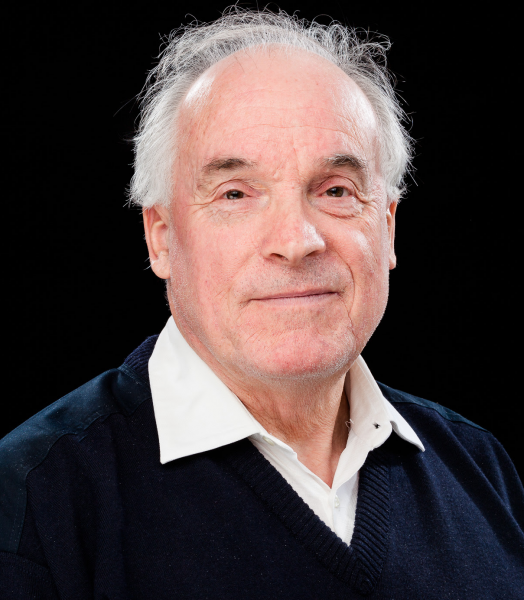
James Trevelyan, The University of Western Australia
Emeritus Professor James Trevelyan
Keynote: Reframing Notions of Engineering Practice
Research studies in several countries have significantly advanced our knowledge of engineering work in the last 20 years. In this talk I shall present some simplified representations which may be easier to understand than the original research publications.
As demonstrated in many research studies, professional engineering work differs from traditional notions of technical problem-solving that still dominate discourse among engineers themselves, their employers and their educators.
Even though engineers enact diverse performances in their practice, there is remarkable consistency across disciplines and industry settings. Social interactions with other people form the most significant time component, enacting complex collaboration performances. While it is the cognitive technical performances, usually mediated by computers, that characterize engineering work, these comprise a much smaller component of work time.
For technologists (e.g. programmers, plant controllers, drafters, data specialists), computer-mediated cognitive performances, computer-mediated interactions with abstract objects comprise the most significant time component. They develop extensive tacit knowledge that forms the basis of their proficiency.
Technicians, on the other hand, spend much of their time interacting with physical objects (hands-on work). As for technologists, extensive tacit knowledge, including highly developed hand-eye sensory-motor skills, forms the basis of their proficiency.
This emerging view of engineering work could help reshape the Washington, Sydney and Dublin accords which have not gained wide global acceptance so far. Instead of an occupational hierarchy with engineers on top, we can understand how these occupational groups in engineering provide complimentary capabilities, all of which are essential for effective practices.
The predominance of social activity in professional engineering work challenges traditional understandings of practice among university educators and students. However, it may not be so difficult to reshape education in ways that could help graduates develop a more realistic appreciation of practice. Social activity dominates education practices as well, and helping students to understand the social performances that on which their learning depends might be an effective way to help them understand professional engineering practice without disruptive curriculum changes.
Finally, I shall briefly emphasize the need for researching engineering work in the context of organizations that host and support work practices. I shall draw attention to some significant recent studies that demonstrate the rewards of this approach. These studies help to demonstrate the often under-rated value of books and research dissertations in relation to journal and conference papers.
Bio
Emeritus Professor James Trevelyan is an engineer, educator, researcher and recently a start-up entrepreneur.
He invented Coolzy, new energy saving, low emissions air conditioning technology for a global market.
His research on engineering practice helped define the Engineers Australia professional competencies for chartered engineers. His books “The Making of an Expert Engineer” and “Learning Engineering Practice” are influencing the future of engineering education in universities and workplaces.
He is best known internationally for pioneering research on sheep shearing robots from 1975 till 1993 and for the first industrial robot that could be remotely operated via the internet in 1994, one of the earliest demonstrations of the ‘internet of things’. He also made significant contributions to help with the removal of anti-personnel landmines and other unexploded ordnance in many countries.
His recent research has helped clarify significant factors that make economic and social development in the Global South more challenging than in wealthier countries. His research offers several unconventional measures that could contribute significant improvements in progress towards the UN Sustainable Development Goals.
Web pages: