Beam conditions
Choice of beam conditions can have the most significant impact on the quality of images you can obtain in SEM. There are two parameters you will need to pay attention to:
- Accelerating voltage, Vacc
- Spot intensity
Accelerating Voltage
This parameter determines the kinetic energy of the electron beam used to probe your sample surface. For example, a 15 kV accelerating voltage results in an electron with 15 keV kinetic energy. Accelerating voltage, and thus beam energy, impacts the quality of your images in multiple ways.
The kinetic energy of the beam determines its ability to distinguish between small objects, i.e. resolution. Generally:
- Higher Vacc gives better resolution
- Lower Vacc gives poorer resolution
How deep into a sample surface the electron beam travels is also impacted by its energy:
- Higher Vacc results in deeper information
- Lower Vacc results in more surface information
Higher energies can lead to damage of soft materials, and also make charging issues worse on poor conductors:
- Higher Vacc increases damage and charging
- Lower Vacc reduces damage and charging
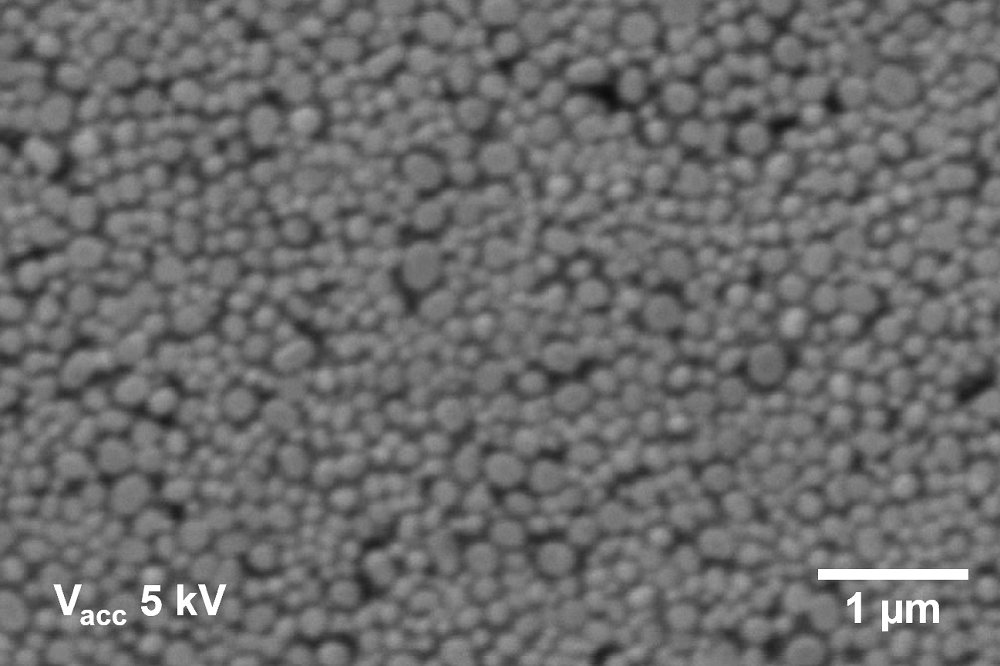
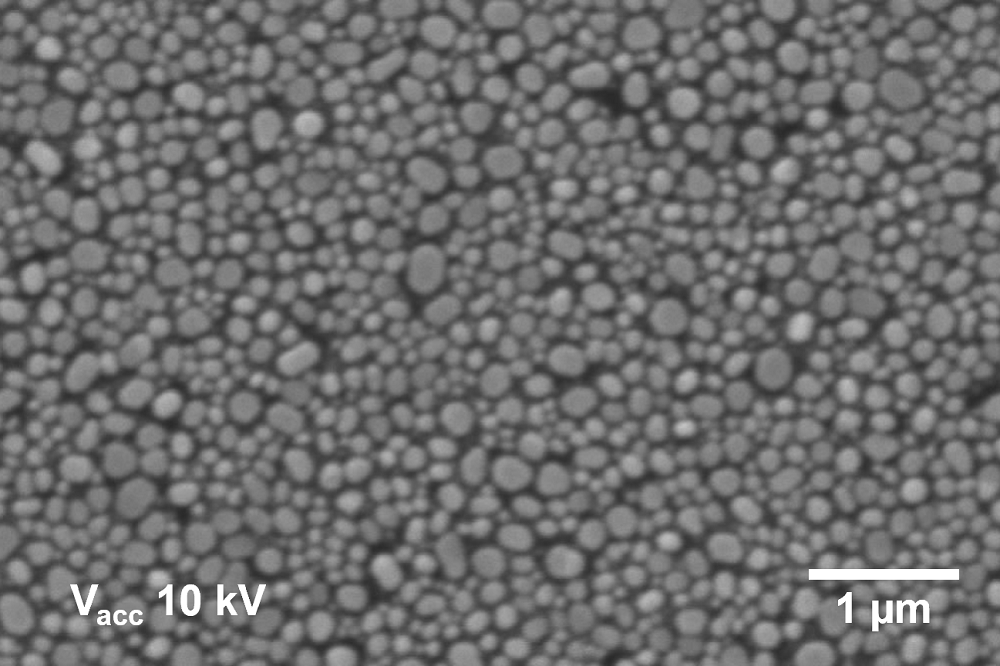
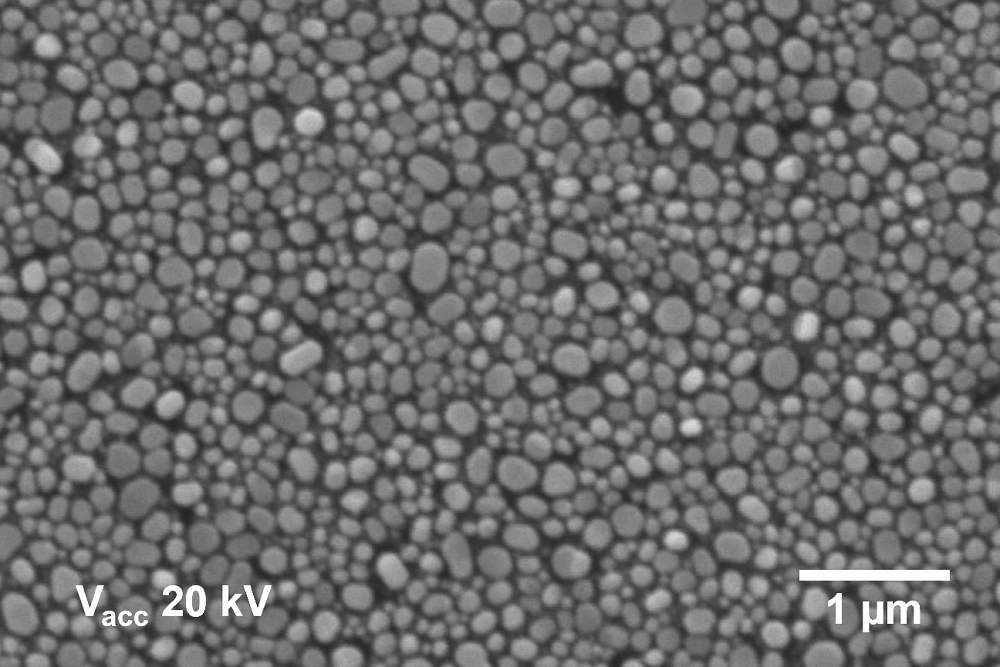
These images show how changing the accelerating voltage impacts the resolution of the SEM. Increasing the voltage improves the sharpness of the images.
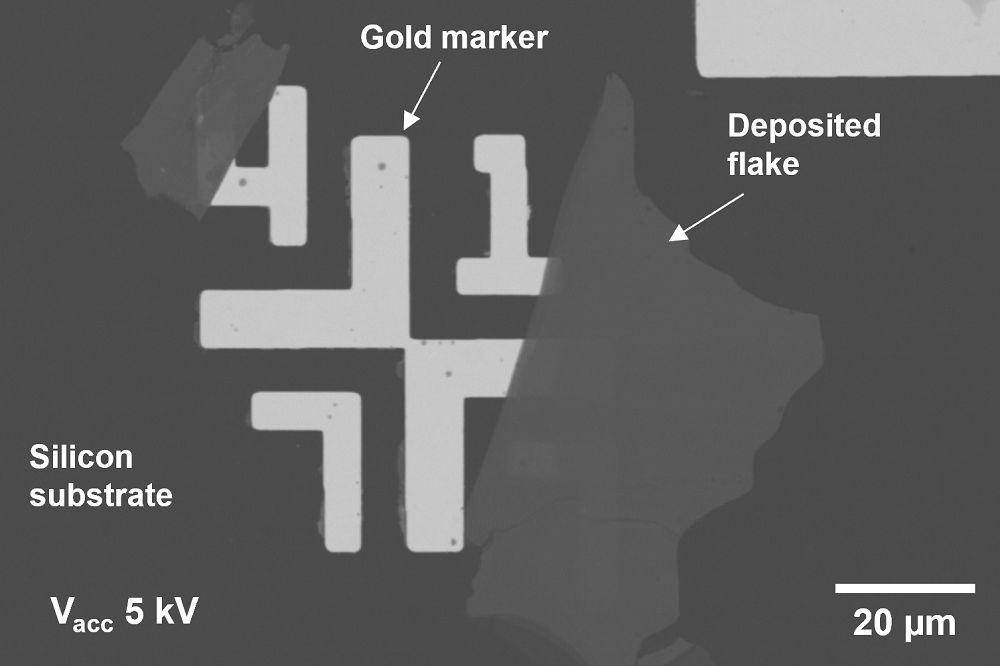
These images demonstrate the change in depth sensitivity with accelerating voltage. At high beam energy the technique "see through" thin materials on a surface. Reducing the accelerating voltage improves the contrast for thin flakes and 2D nanomaterials.

Spot Intensity
The condenser lens controls how much of the electron beam passes through the column, and this is controlled b ythe spot intensity. In simple terms, this parameter controls the size and brightness of the electron spot on the sample when in focus. Your choice of spot intensity will depend on the sample, the feature sizes you are interested in imaging, and the signal you wish to measure.
- Smaller spot size giving sharper image resolution
- Lower current results in less signal generated
- Reduces damage and charging
- Larger spot size giving poorer image resolution
- High current results in more signal generated
- Can increase damage and charging
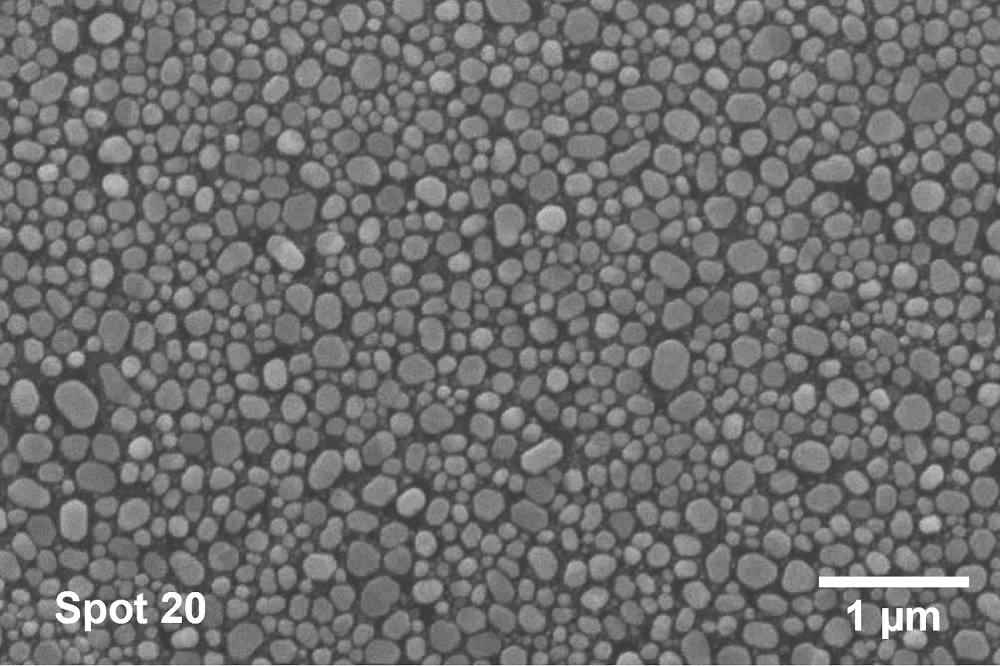

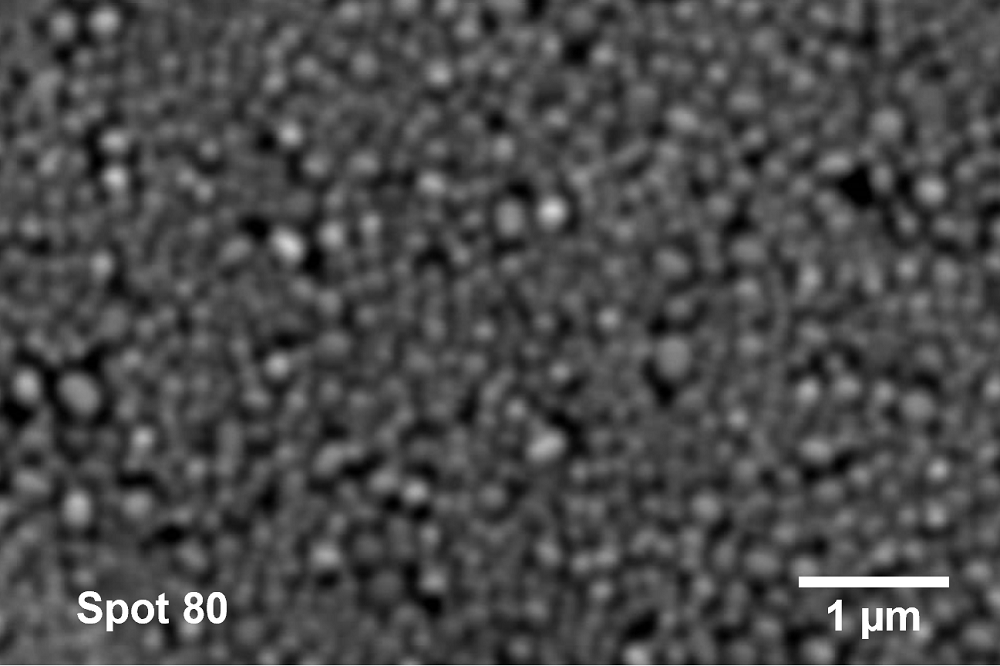
Quick Guide to Beam Conditions
-
Here we want to maximise resolution:
- Choose a high Vacc, e.g. 15-20 kV
- Choose a lower Spot Intensity, e.g. 20-40
-
In VP-SEM mode we usually need to compensate for signal so we usually use a higher Spot Intensity:
- Choose a high Vacc, e.g. 15-20 kV
- Choose a mid-range Spot Intensity, e.g. 40-60
-
To increase surface sensitivity we reduce Vacc and compensate with an increase in Spot Intensity:
- Choose a lower Vacc, e.g. 5-10 kV
- Choose a mid-range Spot Intensity, e.g. 40-60
-
To optimise for EDS we want to start with 15 keV (3× most X-ray energies) and boost our signal with high Spot Intensity:
- Choose a Vacc of 15 kV to start
- Choose a higher Spot Intensity, e.g. 60-80
- You can adjust the Vacc to control surface sensitivity